9 hr
Great Barrier Reef Premium Catamaran Sail
- Expert local guide
- Small group
- Skip-the-line access
- Free cancellation
Great Barrier Reef Snorkeling Cairns — Premium Catamaran & Dive Expeditions
Outer reef platforms and coral gardens, departing daily from Cairns Marina
Compare fares, pick the fit — all bookings are mobile-voucher and eligible for free cancellation where shown.
9 hr
4 hr
8 hr 30 min
Selecting the right great barrier reef snorkeling cairns option depends on your preference for vessel comfort and the depth of your marine engagement. Whether you seek a quick immersion or a comprehensive reef exploration, these curated great barrier reef snorkeling cairns tours cater to diverse underwater interests.
|
Top pick Outer Reef Pontoon Stable Platform |
Outer Reef Superyacht Luxury Cruise | Green Island Adventure Coastal Cay | |
|---|---|---|---|
| Boat/vessel type | Large stable pontoon | High-speed superyacht | High-speed catamaran |
| Duration | Full day | Full day | Half or full day |
| Snorkel only vs snorkel and dive | Both available | Both available | Both available |
| Destination | Fixed outer reef site | Multiple outer reef locations | Island reef environment |
| Best for | First-timers and families | Adventure seekers | Time-restricted visitors |
| See tickets & prices |
Verdict: For a balanced experience, most travelers find great barrier reef snorkeling cairns tickets for a pontoon tour offer the best stability and ease of access.
Worth it for marine life seekers
Great barrier reef snorkeling cairns delivers genuine value when you weigh tour costs against what you actually experience underwater. Half-day adventures start around 100–130 AUD including the 8.5 AUD Environmental Management Charge, while full-day outer reef expeditions run 180–250 AUD. That price buys 4–9 hours on the water, direct access to coral gardens teeming with parrotfish, sea turtles, and reef sharks, and professional guidance that pinpoints the healthiest snorkel sites. Morning departures between 07:00–11:00 capture clearer water and calmer conditions before afternoon wind chop arrives. The outer reef sites visited on longer tours show significantly better coral health and fish density than inshore fringing reefs. For travelers prioritizing marine biodiversity over convenience, great barrier reef snorkeling cairns tours justify the spend—you're paying for proximity to one of the planet's richest ecosystems, not a generic beach swim. Budget-conscious visitors can extract solid value from half-day options, though serious snorkelers should allocate the extra dollars for full-day outer reef access where visibility and coral coverage peak.
Bottom line: Great barrier reef snorkeling cairns tickets deliver measurable value when you prioritize marine life density over convenience, especially on full-day outer reef adventures where coral health and visibility justify the cost.
They complement each other; most visitors who do both call Port Douglas the more intimate gateway, while the great barrier reef snorkeling cairns experience offers more variety in marine life exploration.
|
Top pick Cairns Trips |
Port Douglas Trips | |
|---|---|---|
| Distance to outer reef | 60–70 km | 40–50 km |
| Boat transfer time | 90–120 minutes | 60–90 minutes |
| Reef quality | High diversity and coral variety | High coral cover and visibility |
| Crowd levels | Higher volume of vessels | Lower volume of vessels |
| Town atmosphere | Active city and nightlife | Relaxed village coastal vibe |
| Typical tour price | 250–350 AUD | 240–340 AUD |
| See tickets & prices |
Verdict: Choose a great barrier reef snorkeling cairns tour for broader logistics and city amenities, or select the Port Douglas alternative if you prioritize shorter transit times to reach the outer coral formations for your great barrier reef snorkeling cairns tickets.
Hand-picked experiences loved by thousands of travelers
8.5 hours
Free Cancellation
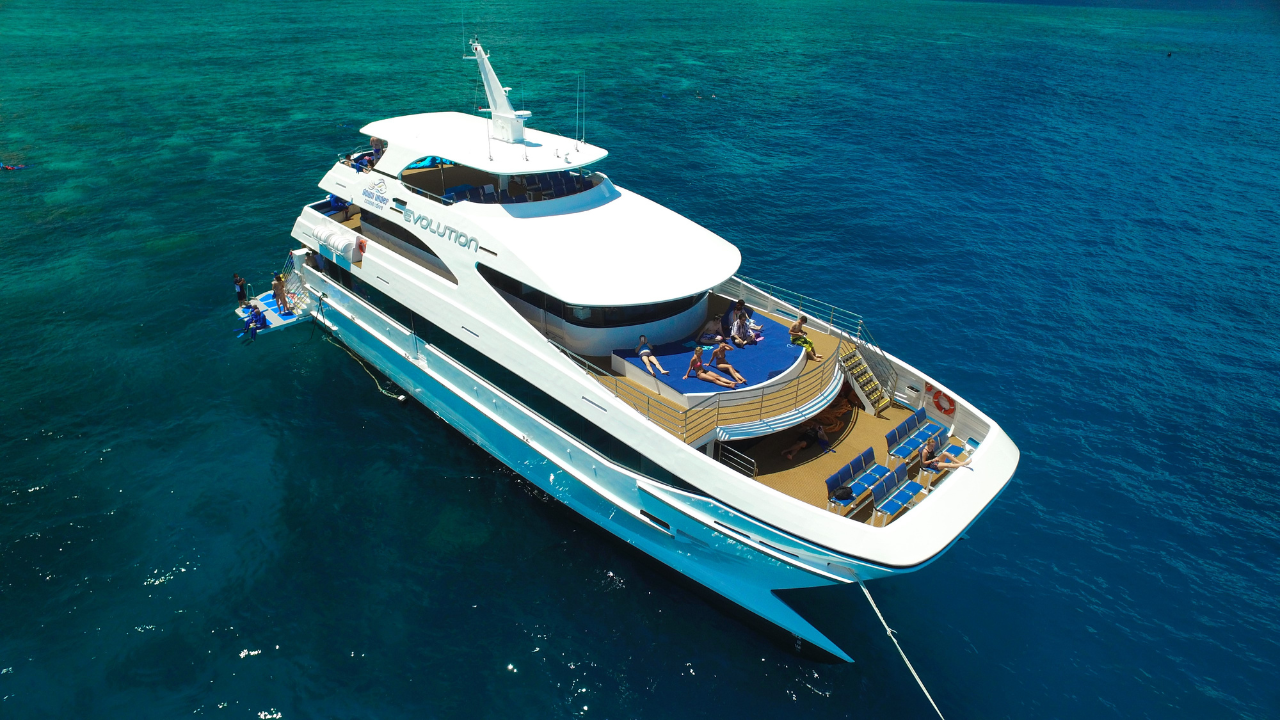
Sail beyond the inner reefs to pristine coral gardens aboard a luxury vessel with snorkeling at two remote sites
5 hours
Free Cancellation
Intimate small-group snorkel tour to pristine Outer Reef sites with marine biologist guides
8 hours
Free Cancellation
Sail to a pristine coral cay in the Great Barrier Reef for snorkeling, swimming, and tropical relaxation
9 hours
Free Cancellation
Explore two pristine reef locations with five hours of water time and Indigenous storytelling
8 hours
Free Cancellation
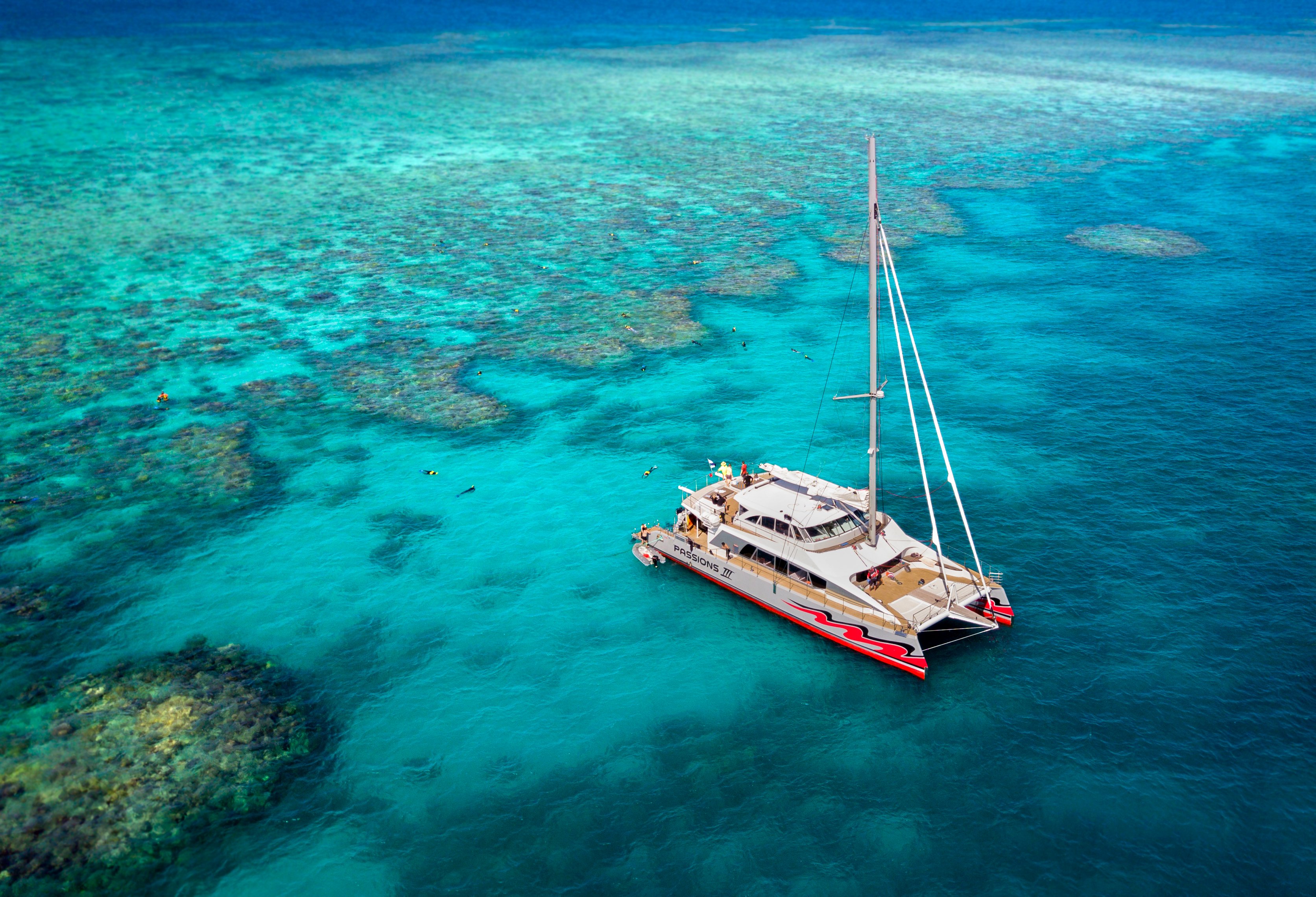
Premium catamaran adventure to three pristine outer reef locations with diving and snorkeling
7 hours
Free Cancellation
Speed across turquoise waters to snorkel two pristine reef sites with expert guides on this 7-hour expedition
8 hours 30 minutes
Free Cancellation
Full-day adventure combining snorkeling at two pristine outer reef sites with an unforgettable aerial tour
9 hours
Free Cancellation
Sail aboard a classic schooner to snorkel pristine coral gardens and unwind on a tropical island beach
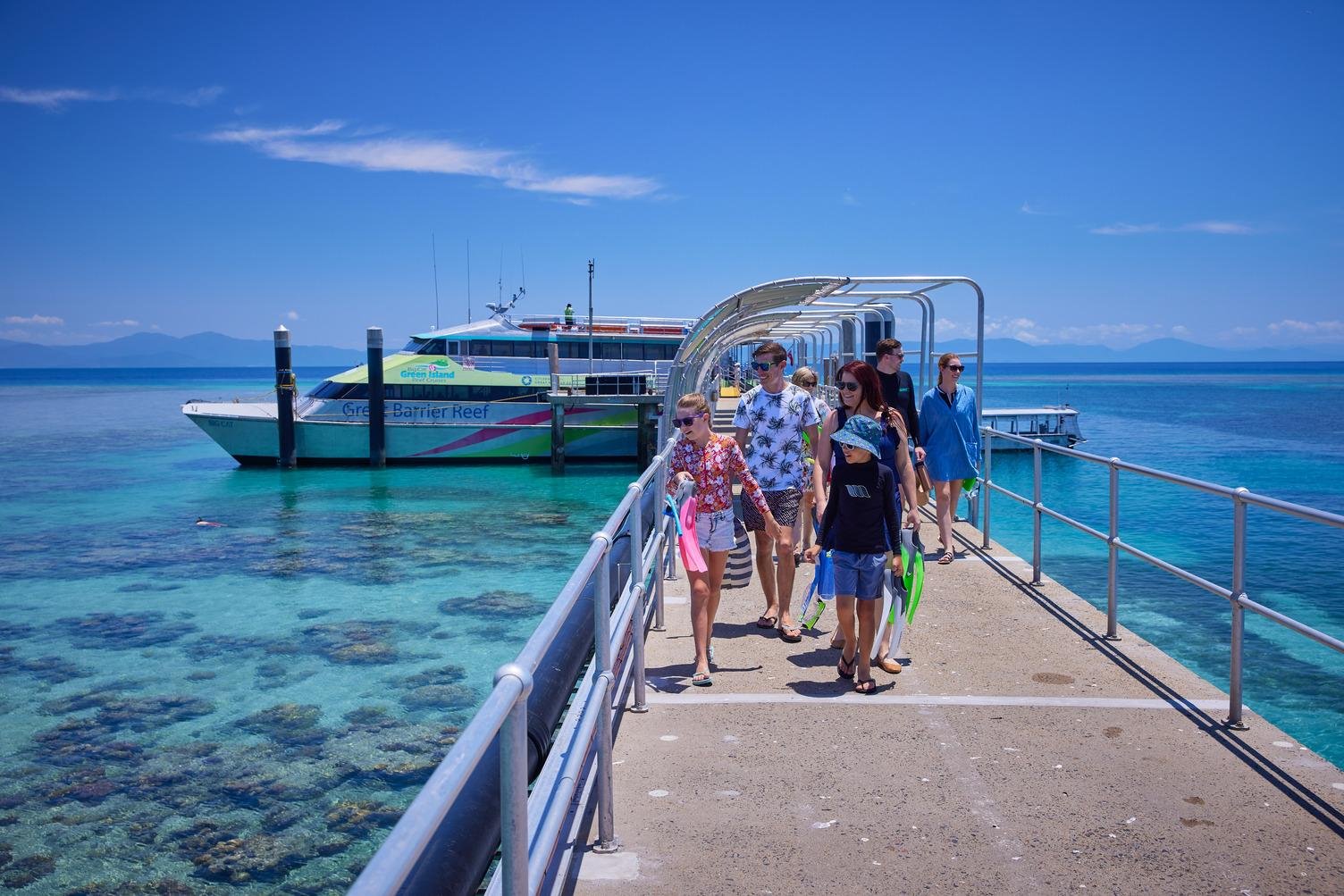
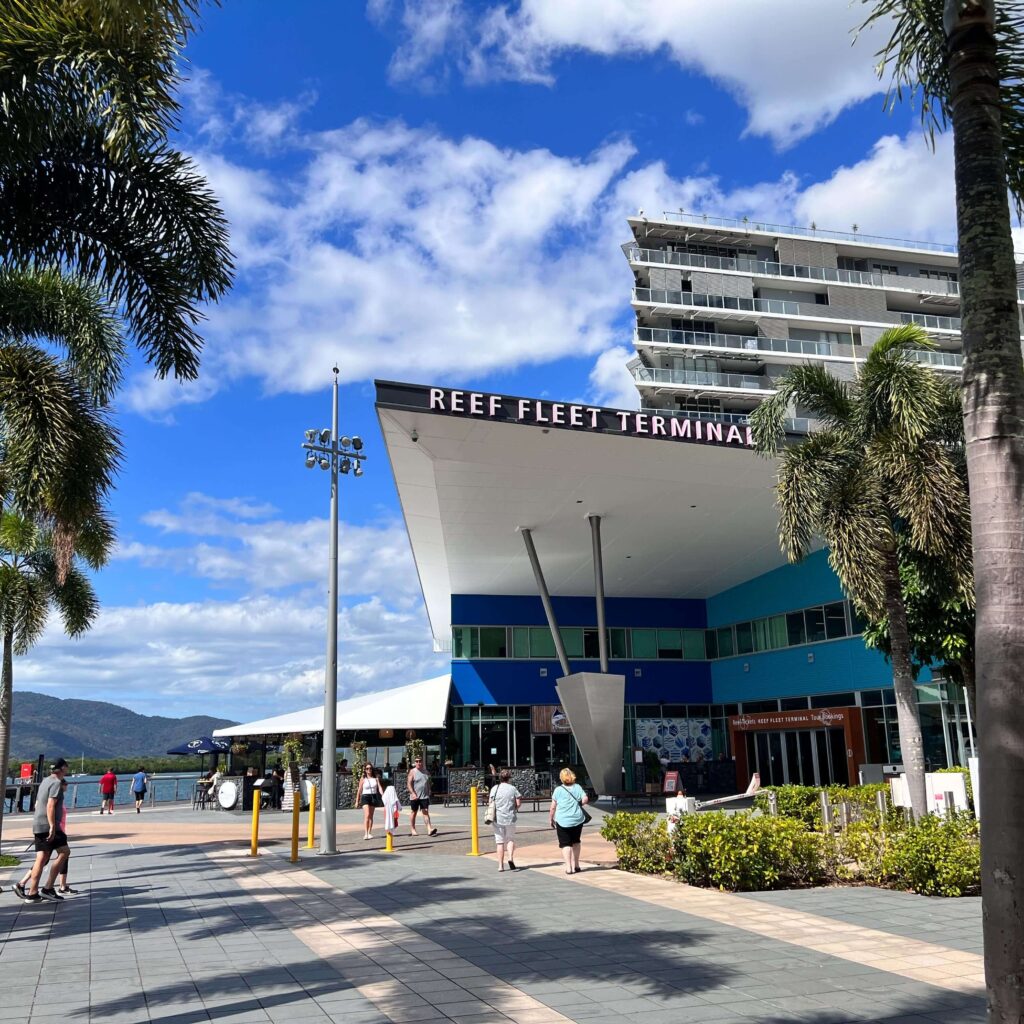
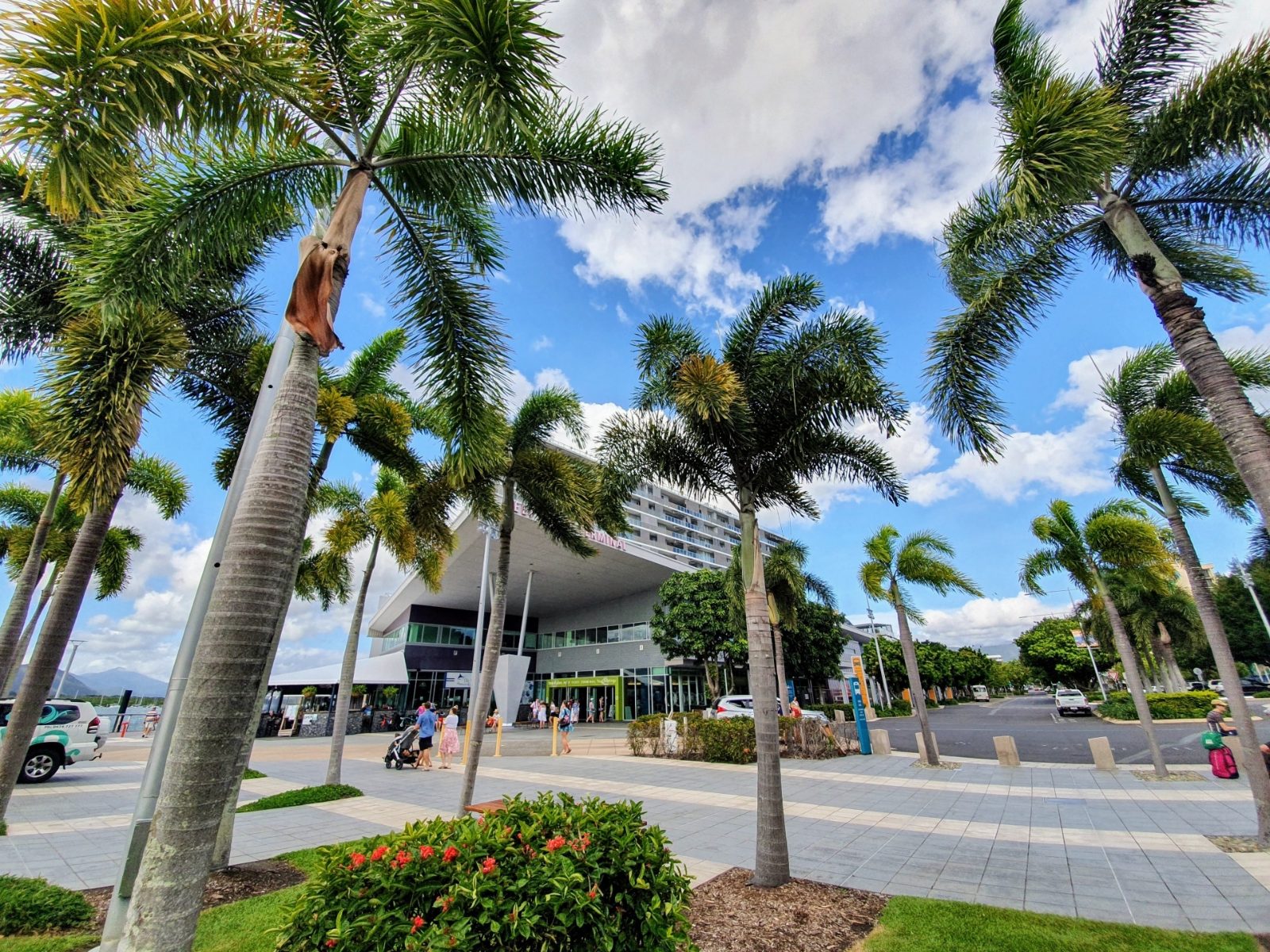
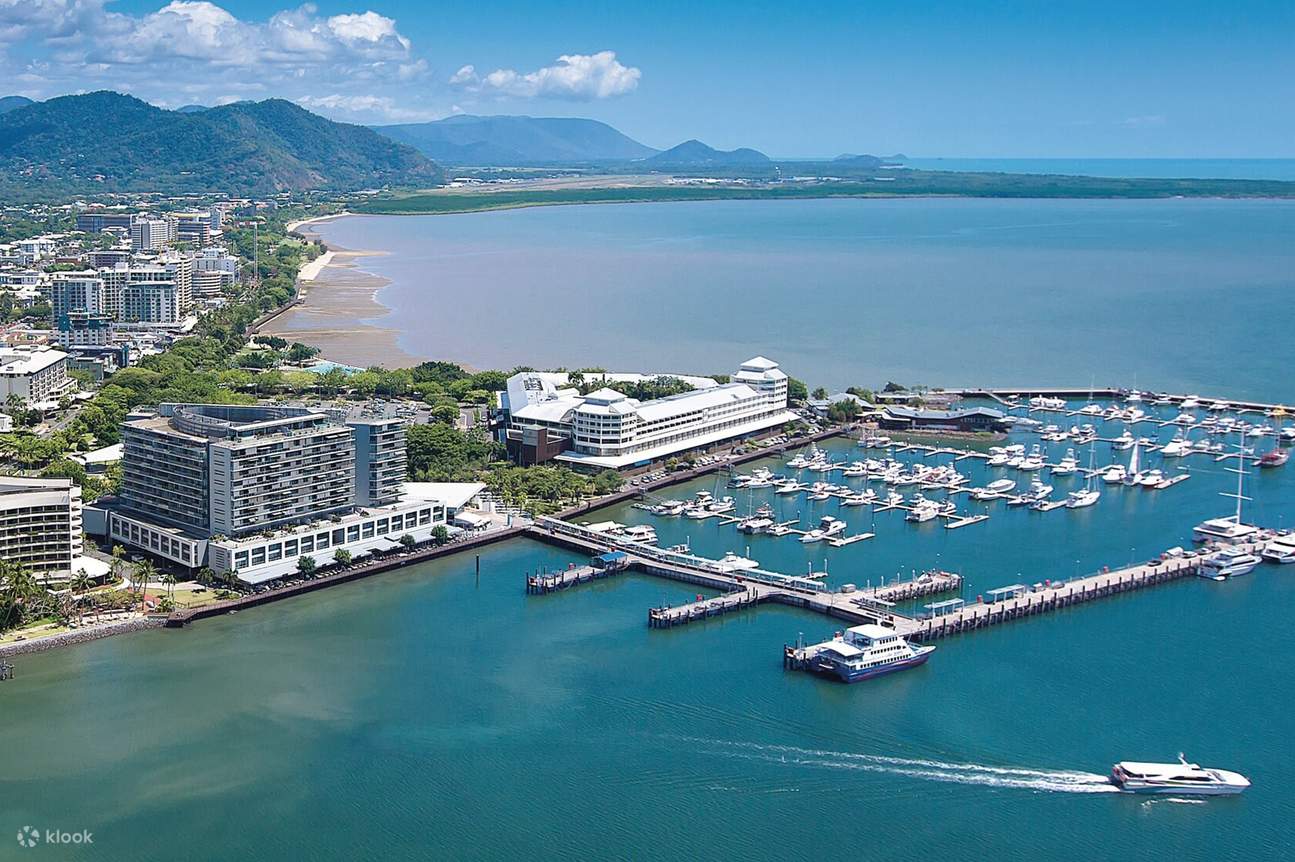
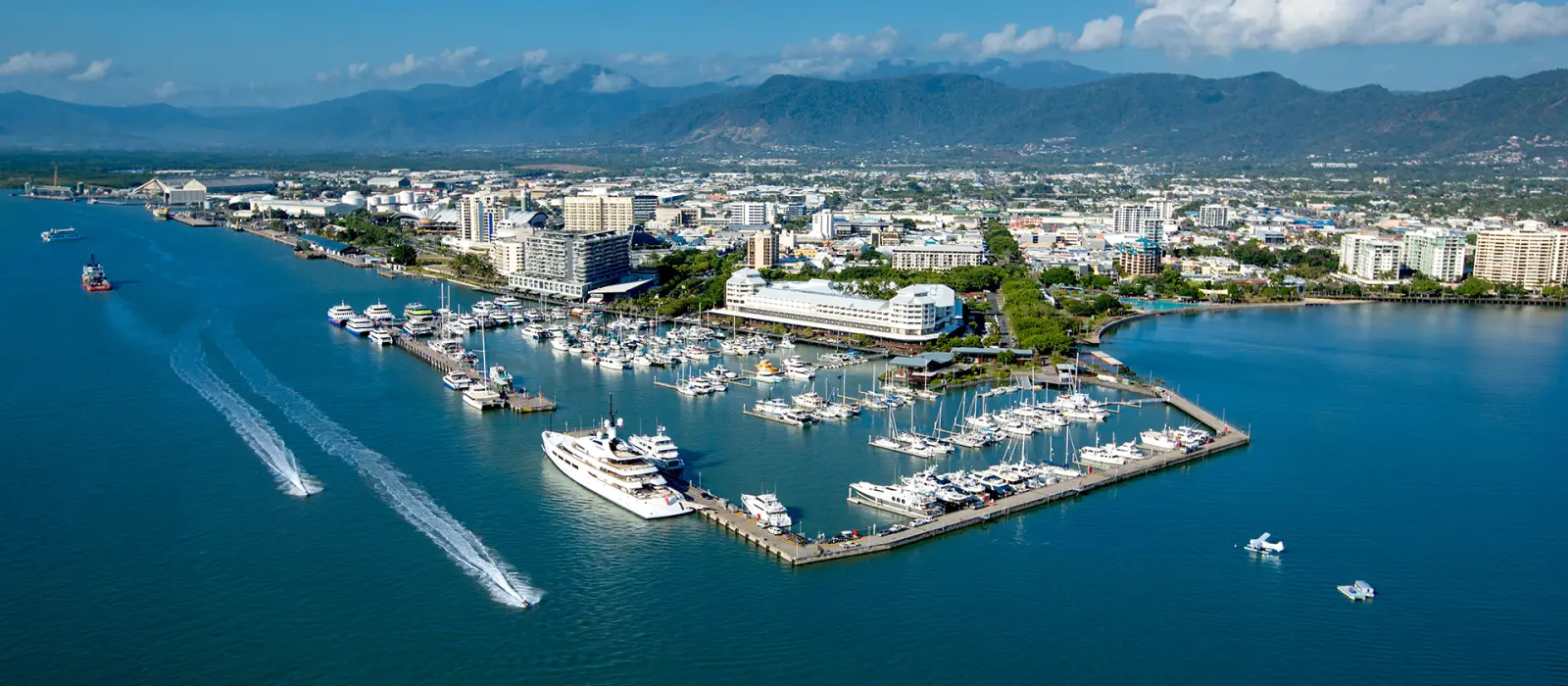
Arrive at Cairns Reef Fleet Terminal or Marlin Marina for check-in and safety briefing before boarding
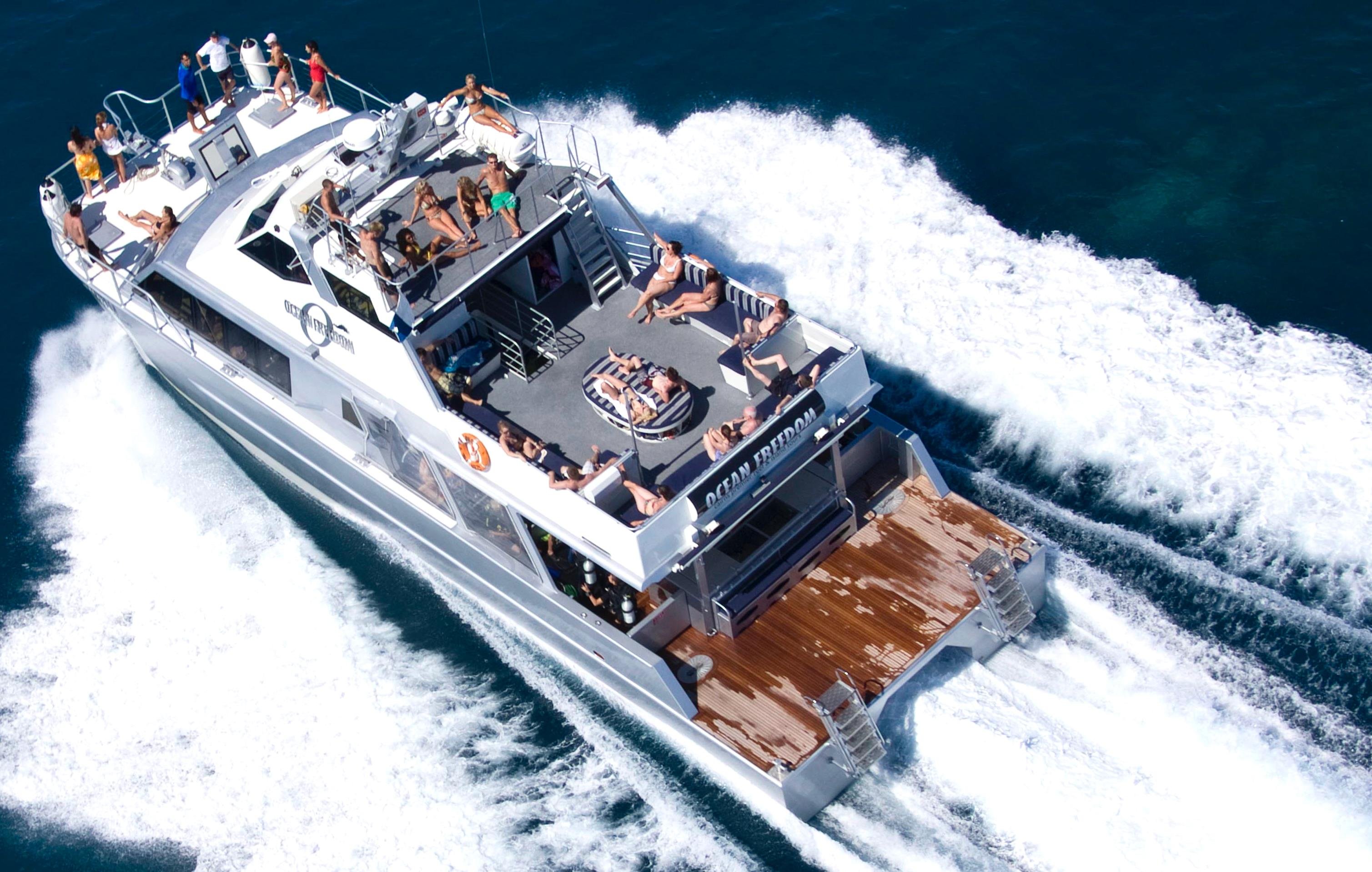
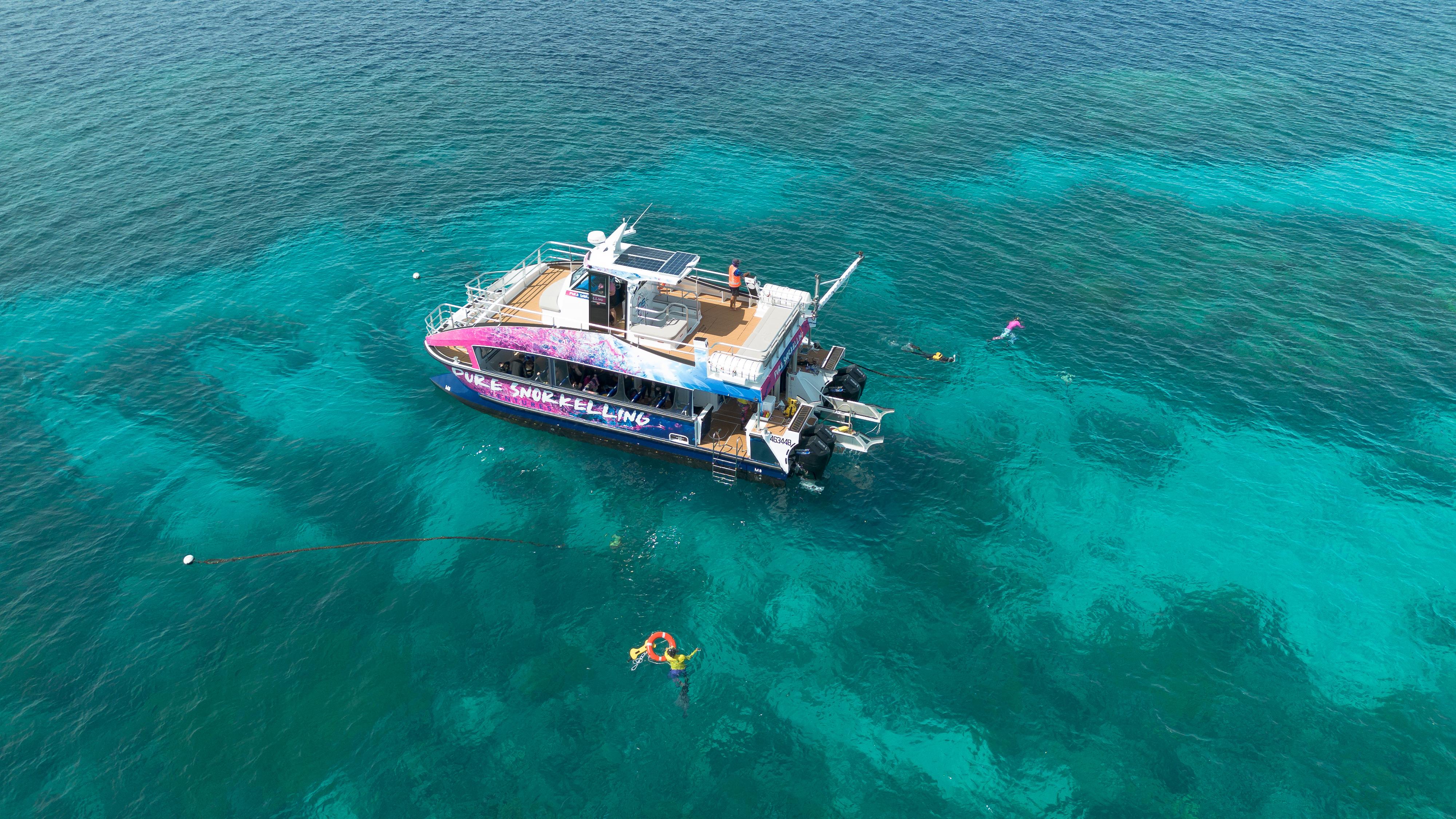
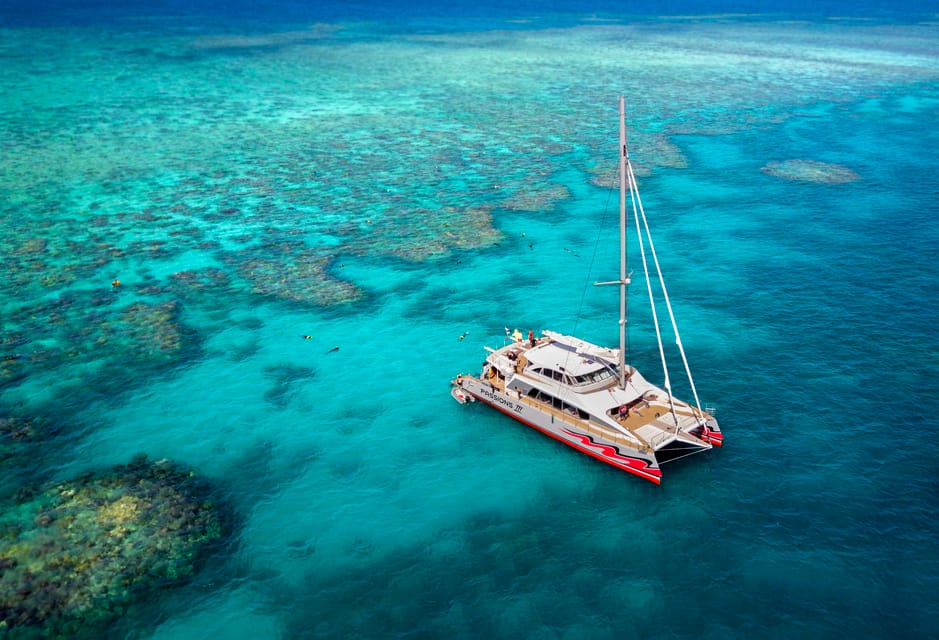
Catamaran cruise from Cairns to outer reef sites such as the Ribbon Reefs or Agincourt Reef
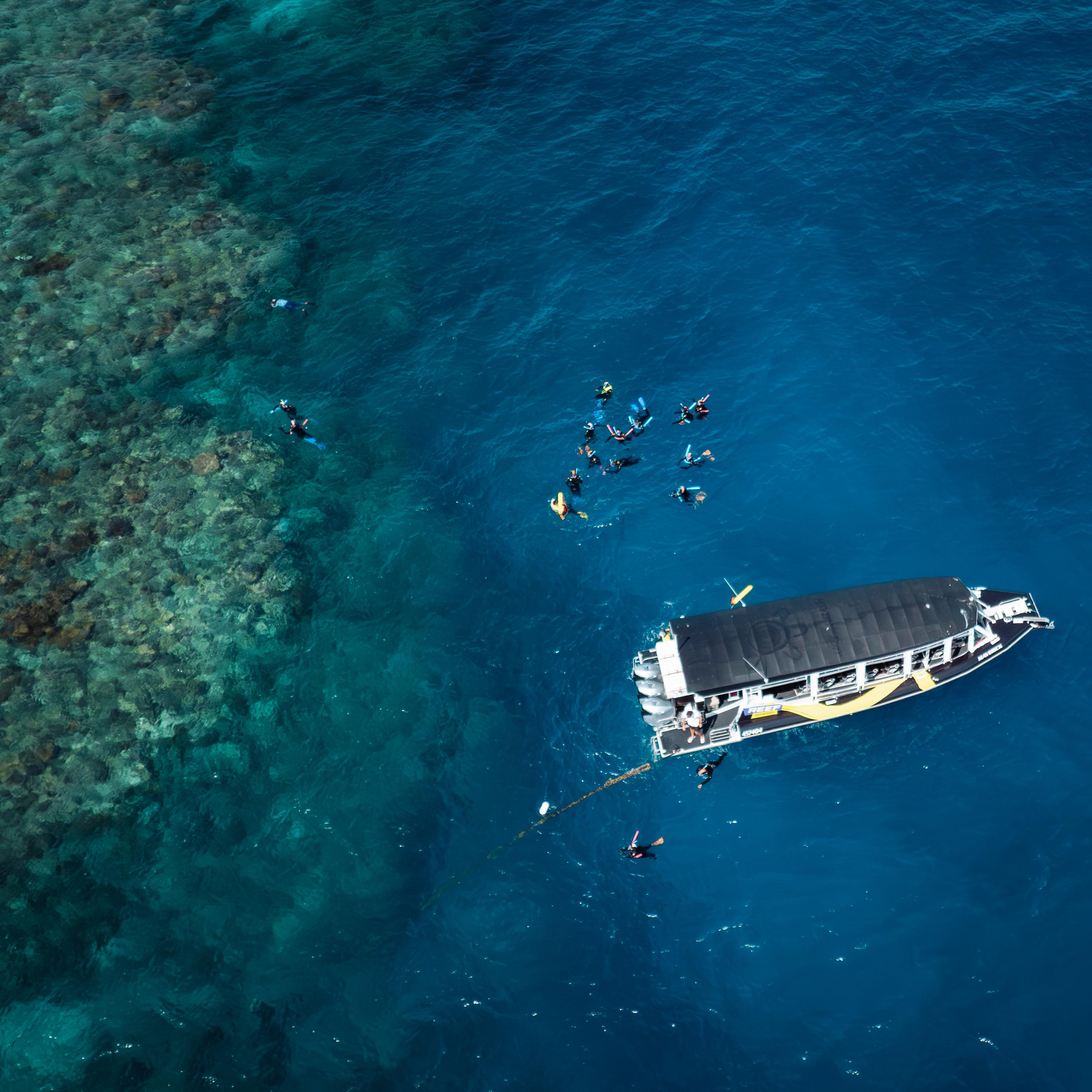
Guided or independent snorkeling around coral bommies with crew safety supervision
Buffet lunch aboard the pontoon or vessel with shaded seating
Additional snorkel session or introductory scuba dive at a second reef site
Cruise back to the marina with time to rinse gear and relax on deck
A chain of narrow, wall-like outer reef formations facing the Coral Sea, known for steep drop-offs and visibility that can exceed 20 meters on clear days. Many outer reef pontoon operators anchor near this system as their primary snorkel site.
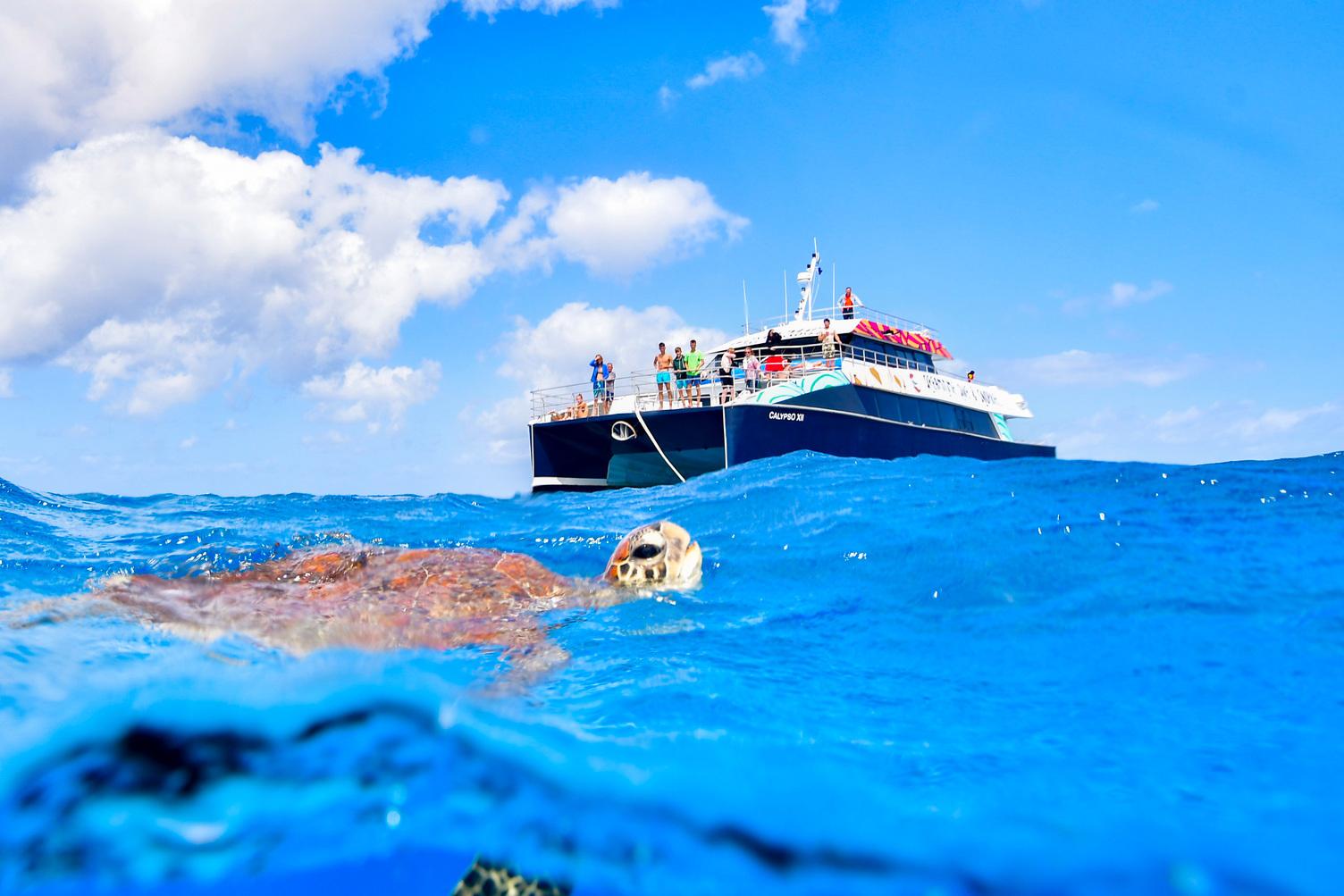
A small coral sand cay roughly 350 meters long that hosts a protected seabird sanctuary with an estimated 20,000 nesting seabirds during breeding season. Snorkeling around its fringing reef is popular for spotting green sea turtles.
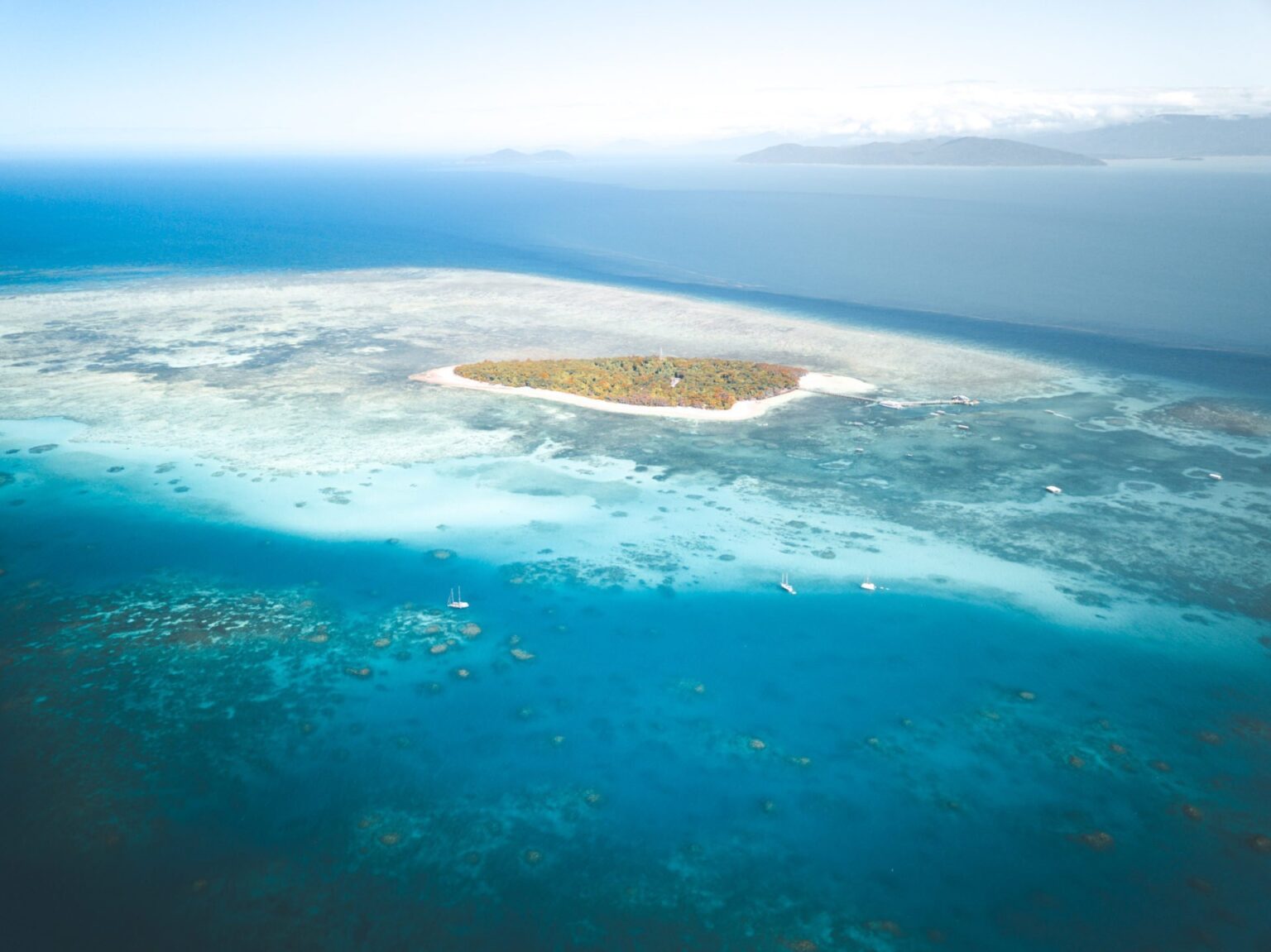
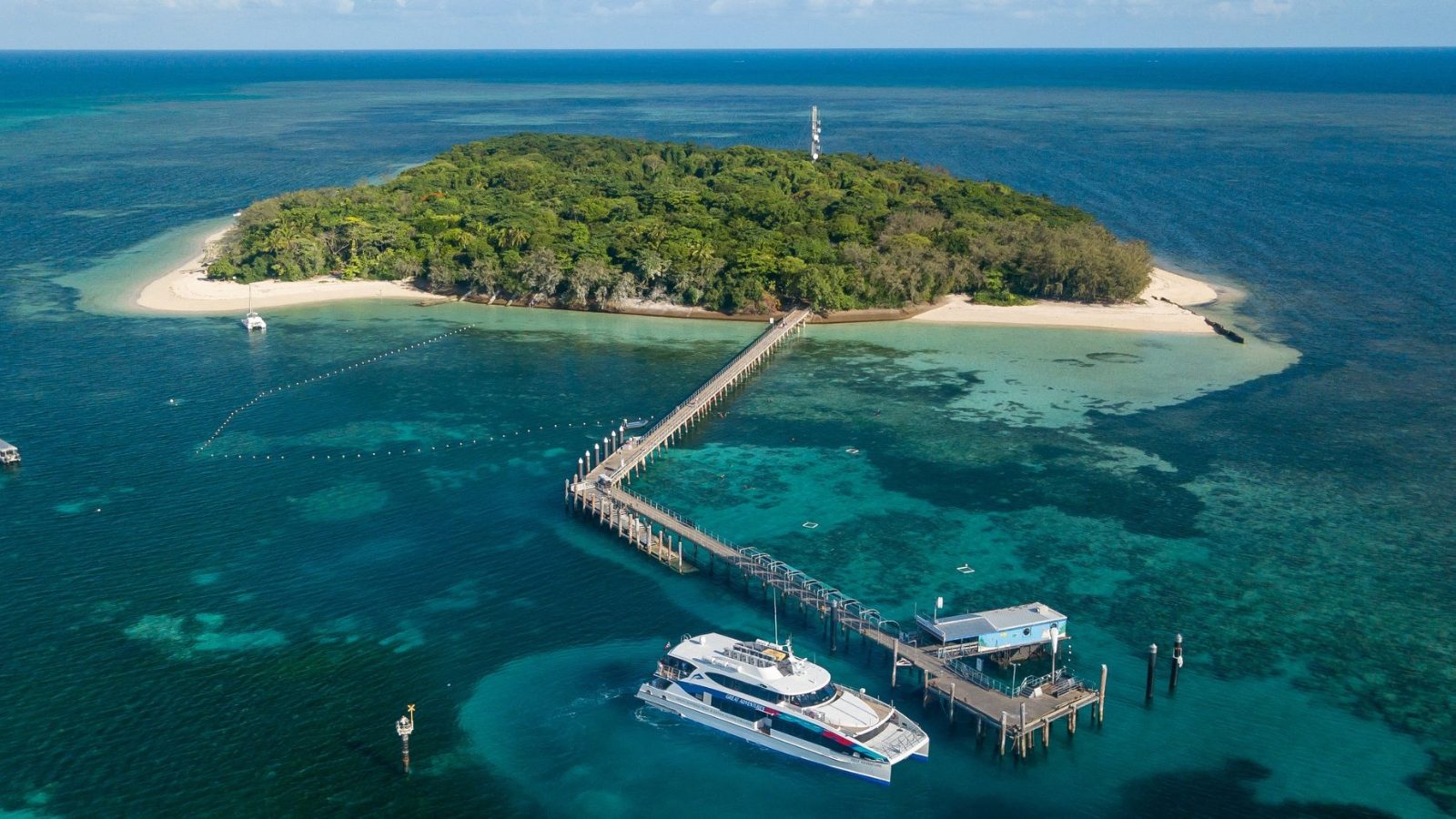
A true coral cay roughly 6,000 years old, sitting about 27 km from Cairns and covered largely by dense rainforest and a national park boundary that reaches the shoreline. Its surrounding fringing reef is a common stop for half-day snorkel tours.
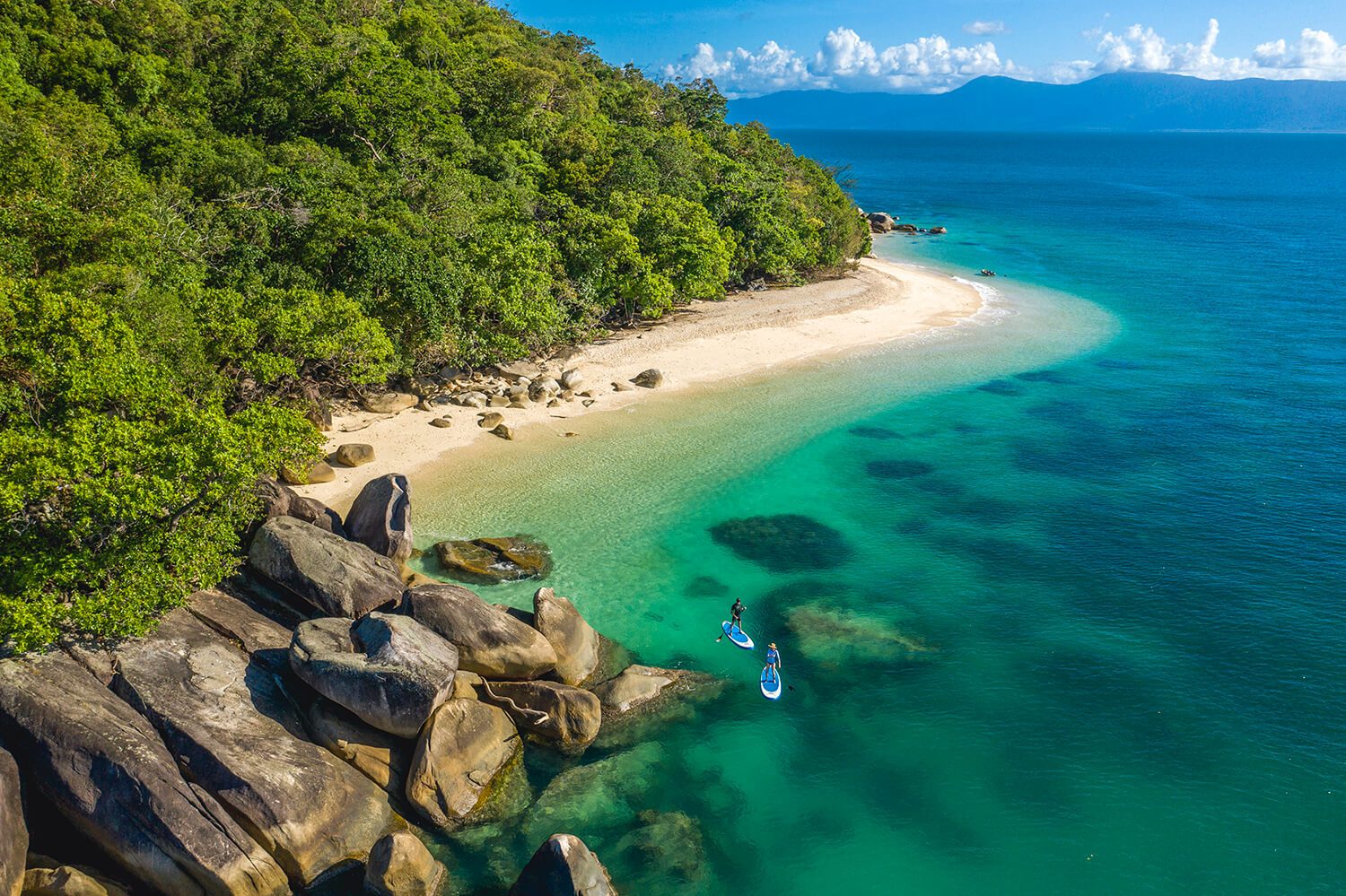
A continental island around 6 km off Cairns with a fringing reef directly accessible from its beaches, making it a common combined hiking-and-snorkeling stop. Its granite boulder shoreline contrasts with the coral cays further offshore.
An outer reef site roughly 2.5 hours by catamaran from Cairns, popular for its sheltered coral bommies and consistent visibility even during moderate wind conditions. It is a frequent second-stop reef for full-day tours running two snorkel sessions.
A series of sheer reef walls where the shallow reef platform gives way abruptly to deep Coral Sea water, attracting larger pelagic species like reef sharks near the edge. Experienced snorkelers and divers are drawn to this zone for open-water sightings.
You board at Reef Fleet Terminal ninety minutes before departure, collecting wetsuit and mask from the crew station while the catamaran loads snorkel groups bound for outer platforms.
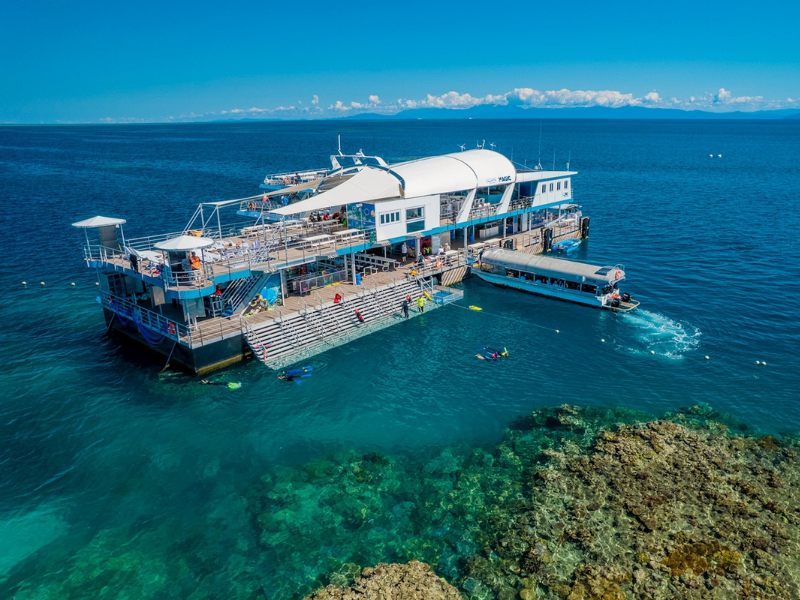
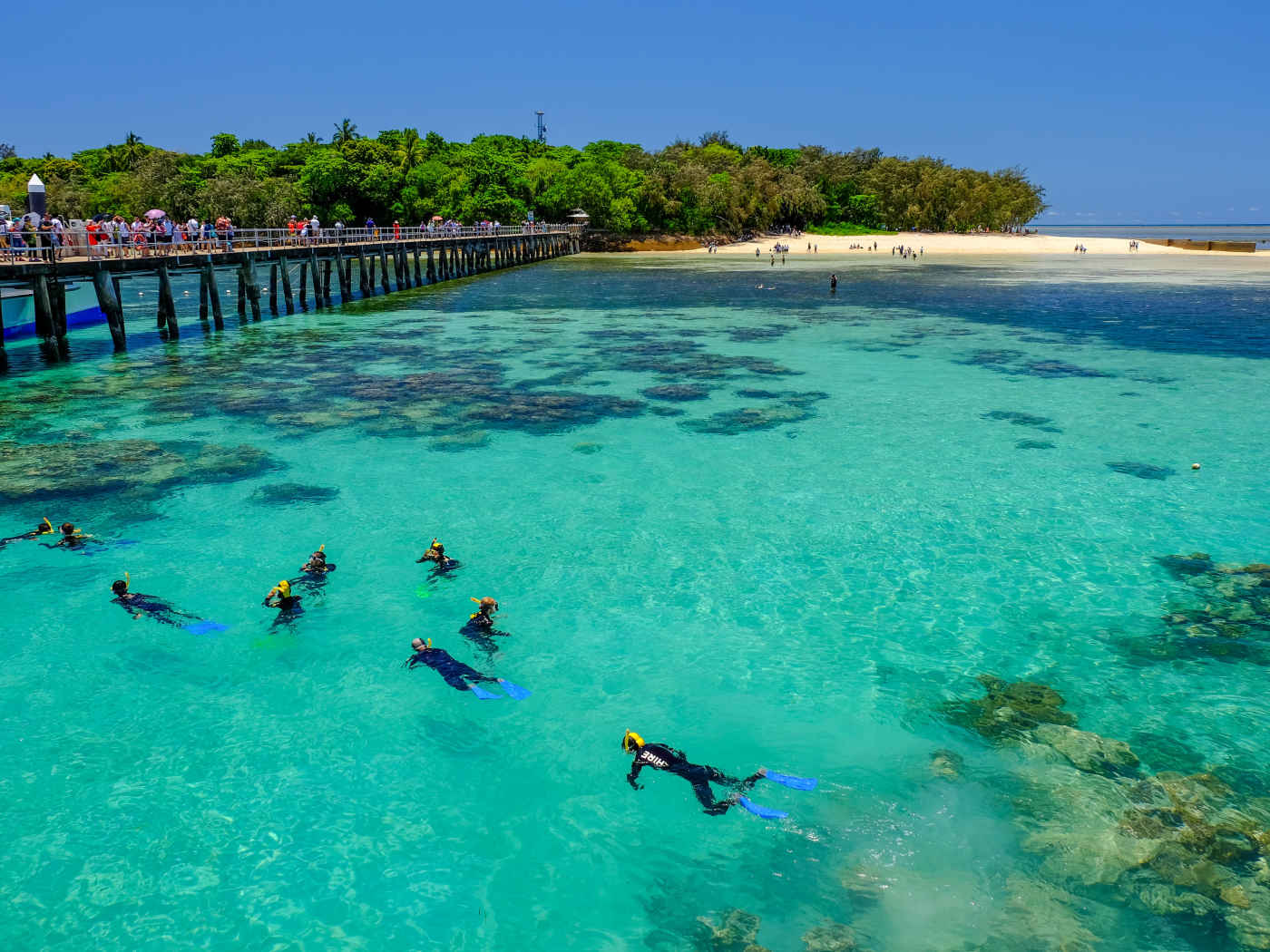
The vessel clears the harbour entrance at eight-thirty, pushing past Green Island and Arlington Reef as the coastline fades to a blue margin. Sixty minutes offshore, the catamaran moors at a permanent pontoon anchored above a shallow coral garden where the water shifts from navy to turquoise as the depth shoals to eight metres.
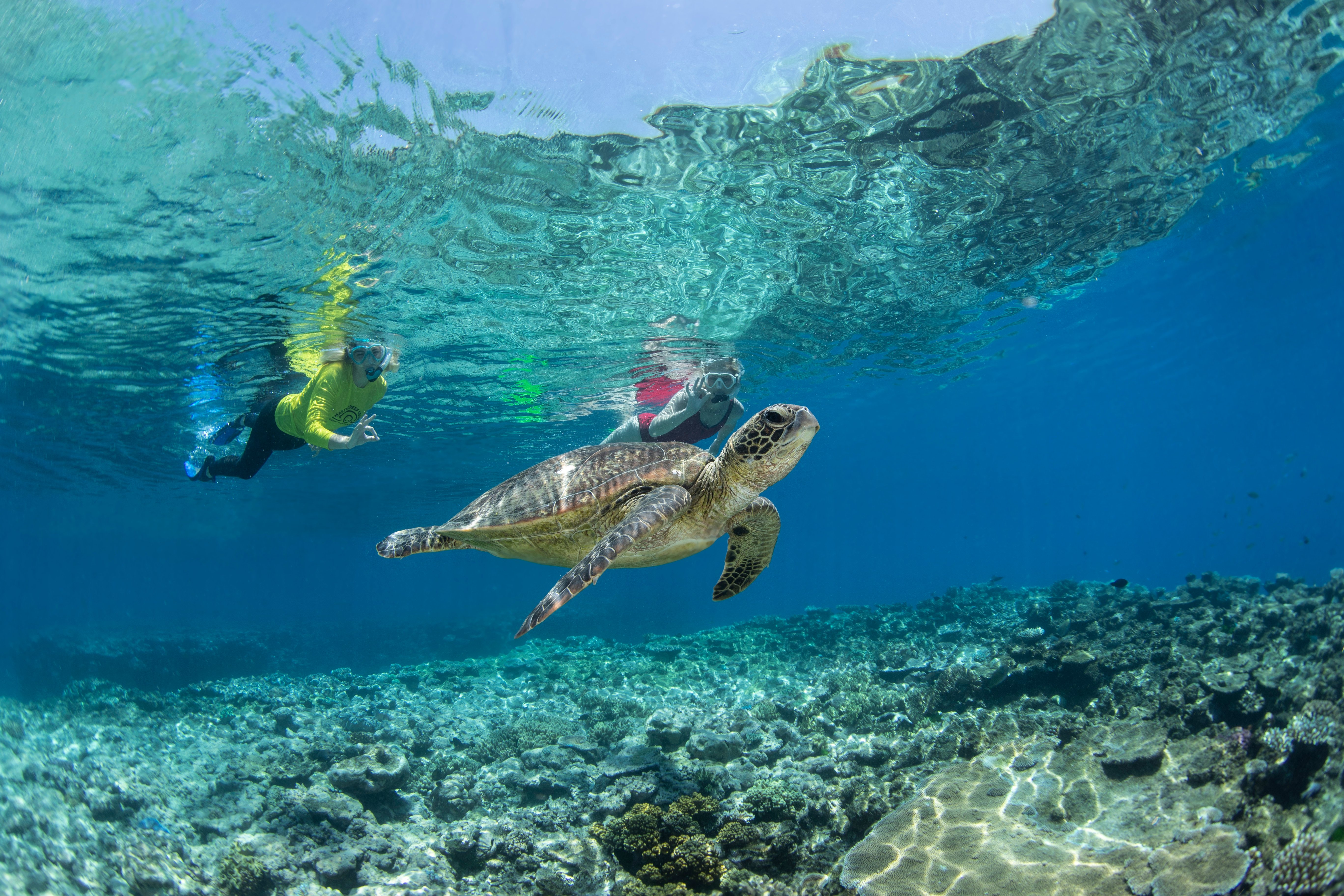
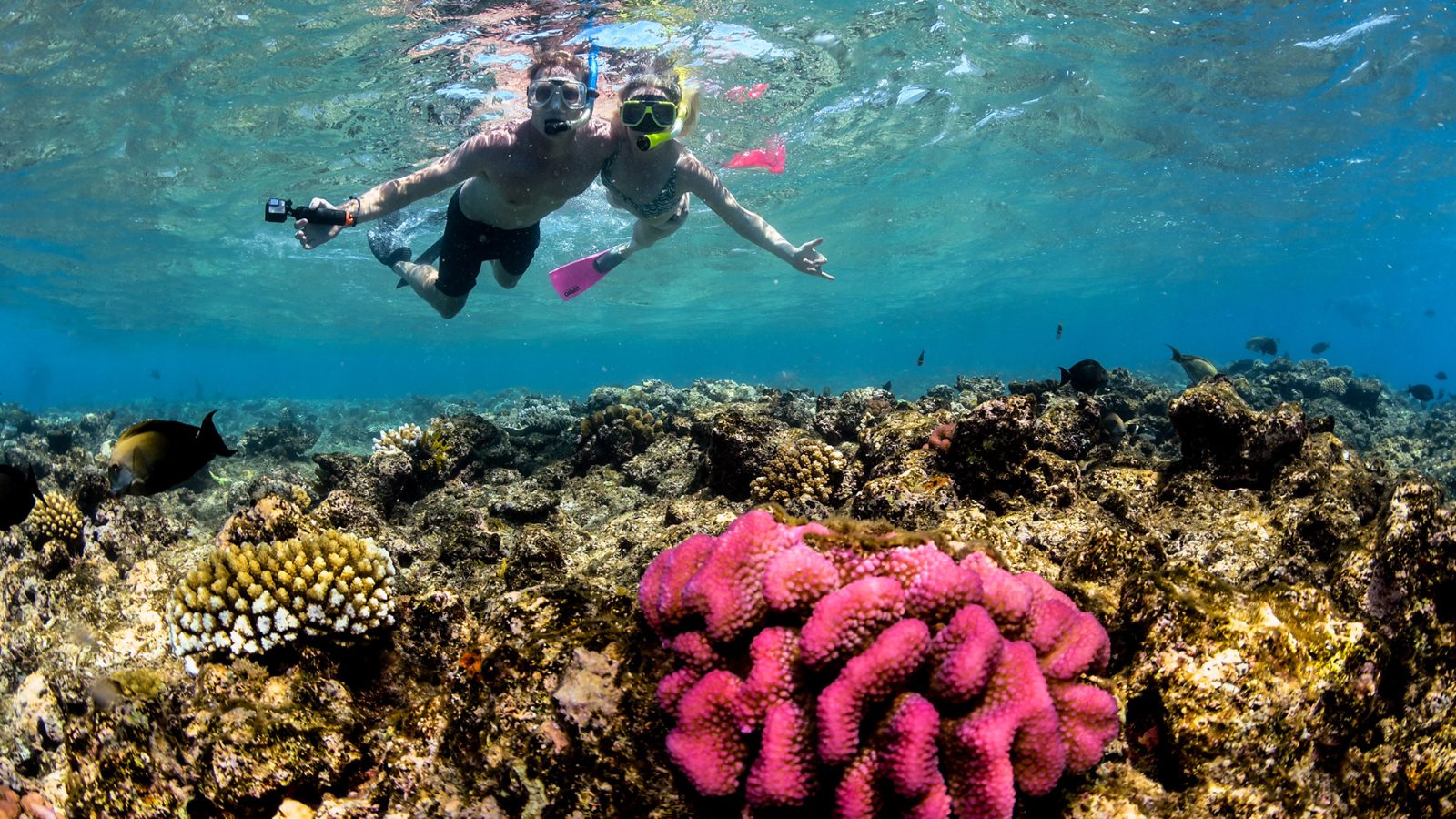
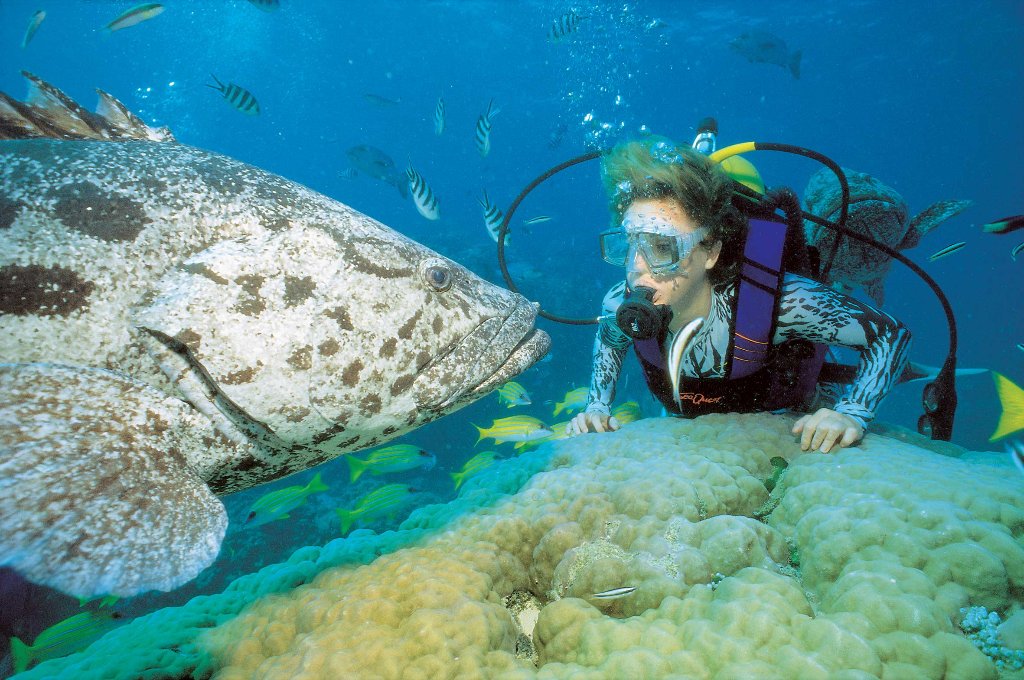
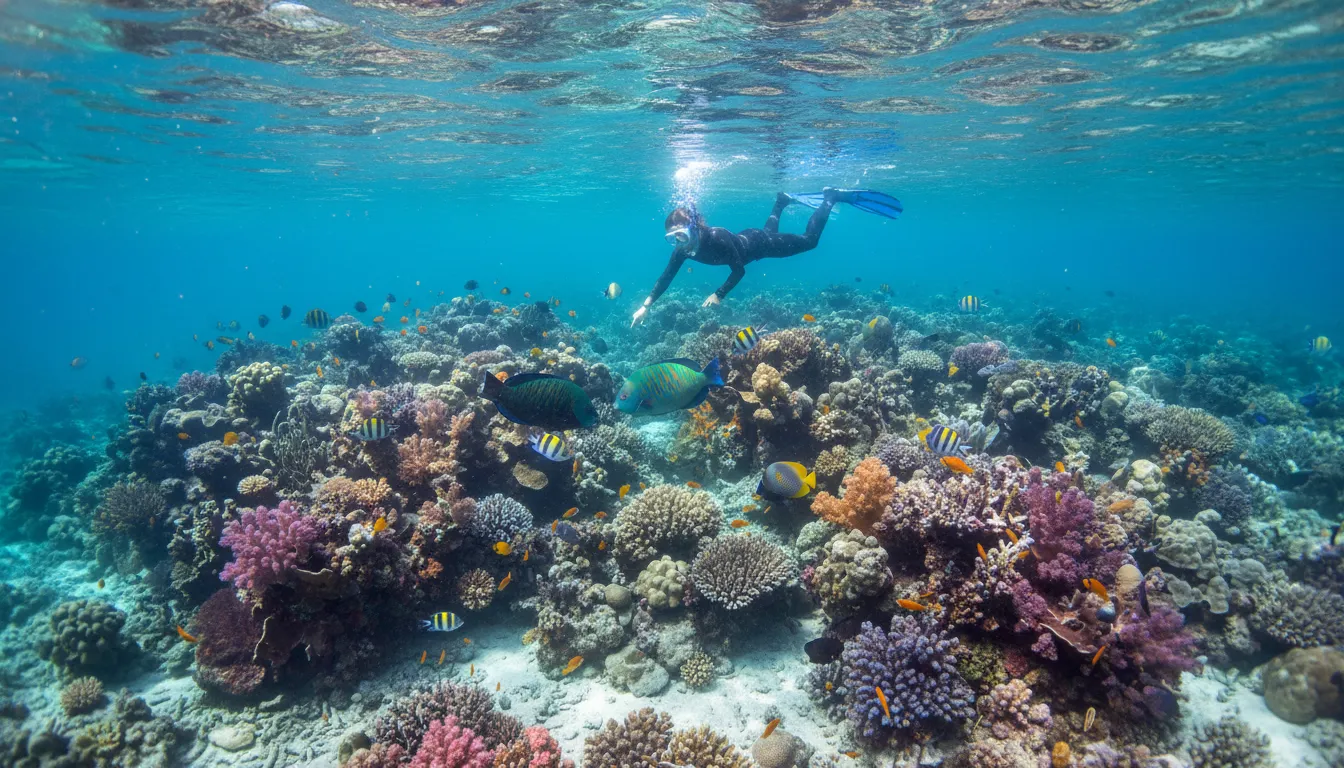
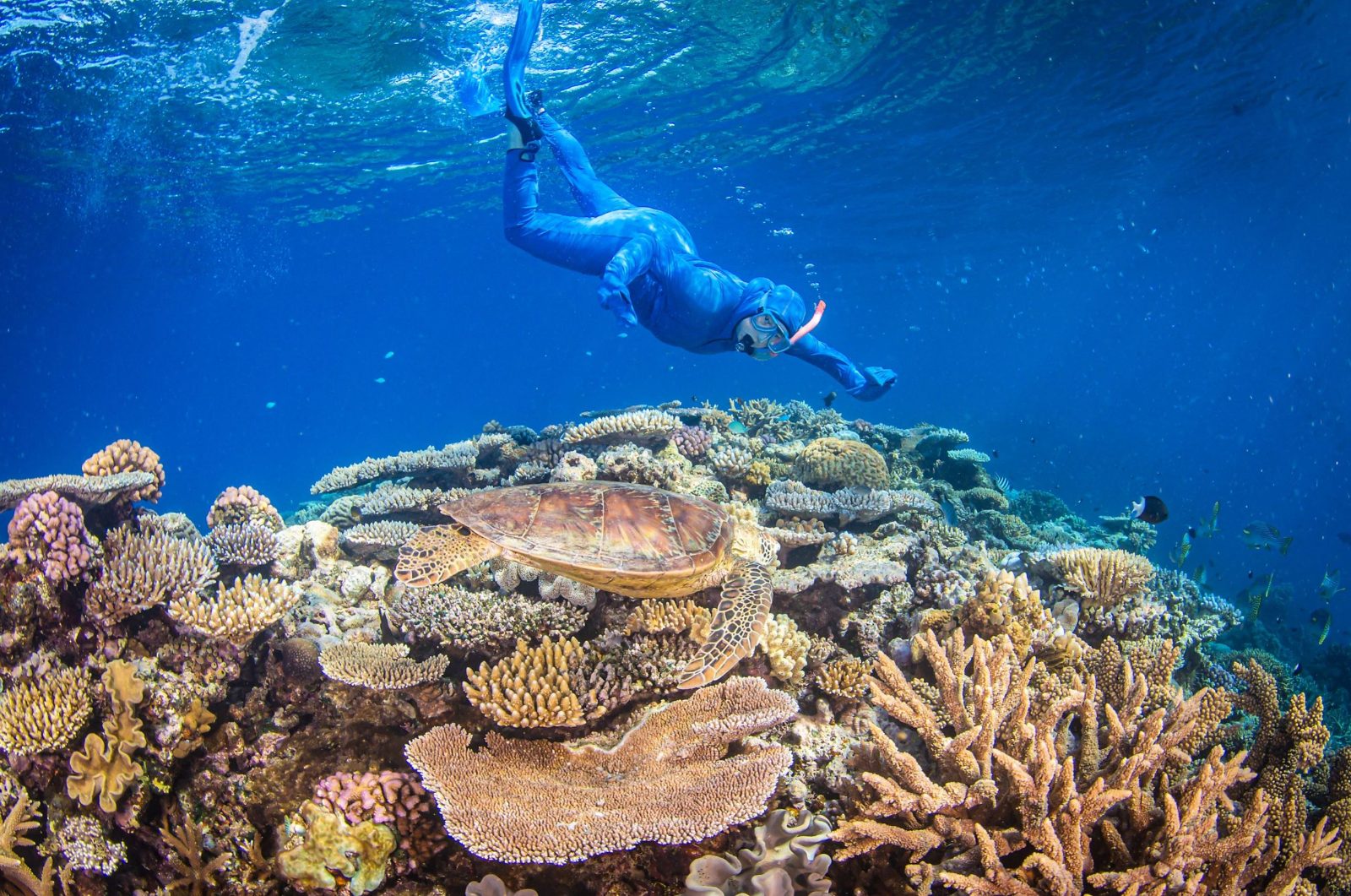
You step off the swim platform into twenty-seven-degree water, the reef materializing beneath you as plate corals stack in terraces and parrotfish graze the algae film on dead substrate. A giant clam the width of a dinner table sits wedged in a coral head, its electric-blue mantle rippling as you drift overhead. The guide points to a whitetip reef shark resting in a sand channel, then leads the group along the reef crest where brain corals form boulders taller than a person. Thirty minutes into the session, a manta ray glides past the mooring line, its wingspan exceeding four metres as it banks through the current feeding on plankton concentrated by the rising tide.
All the details about your upcoming adventure in one place
The Great Barrier Reef Marine Park spans 344,400 square kilometres and contains 2,900 individual reefs, yet fewer than forty sites host commercial snorkeling operations under permit from the Great Barrier Reef Marine Park Authority.
Cairns anchors the largest concentration of those permitted zones, offering direct access to outer reef platforms between fifteen and forty nautical miles offshore where coral coverage exceeds seventy percent and visibility routinely reaches thirty metres during calm-weather windows.
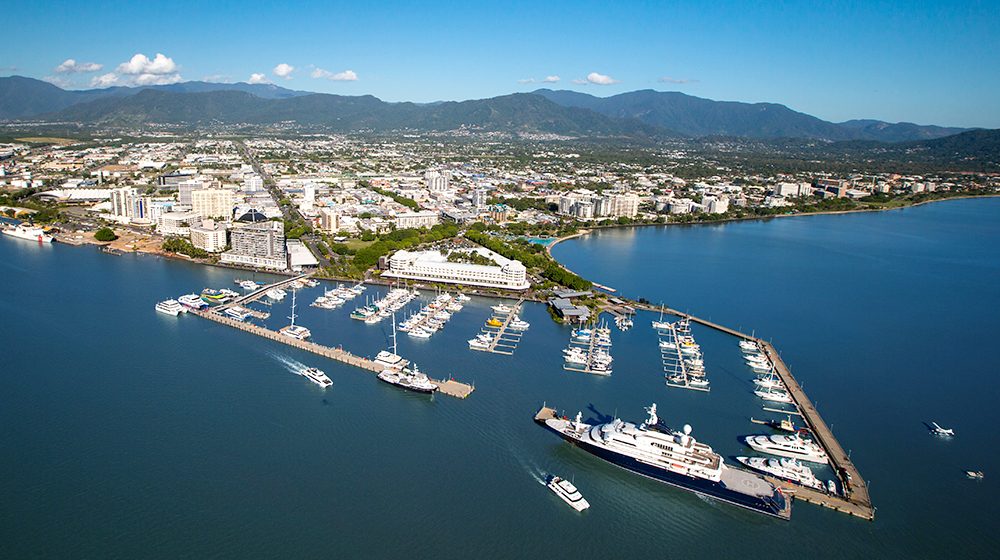
Great barrier reef snorkeling cairns operations depart from the Reef Fleet Terminal in Cairns Marina, where vessels range from fast catamarans carrying two hundred passengers to twelve-berth superyachts targeting low-density sites. The Environmental Management Charge of 8.50 AUD funds field management programs including crown-of-thorns starfish removal, mooring infrastructure, and water-quality monitoring across the marine park's seventy zone designations. Every commercial operator includes this charge in published tour pricing, and the revenue finances reef-check surveys that guide seasonal site rotation to distribute visitor pressure.
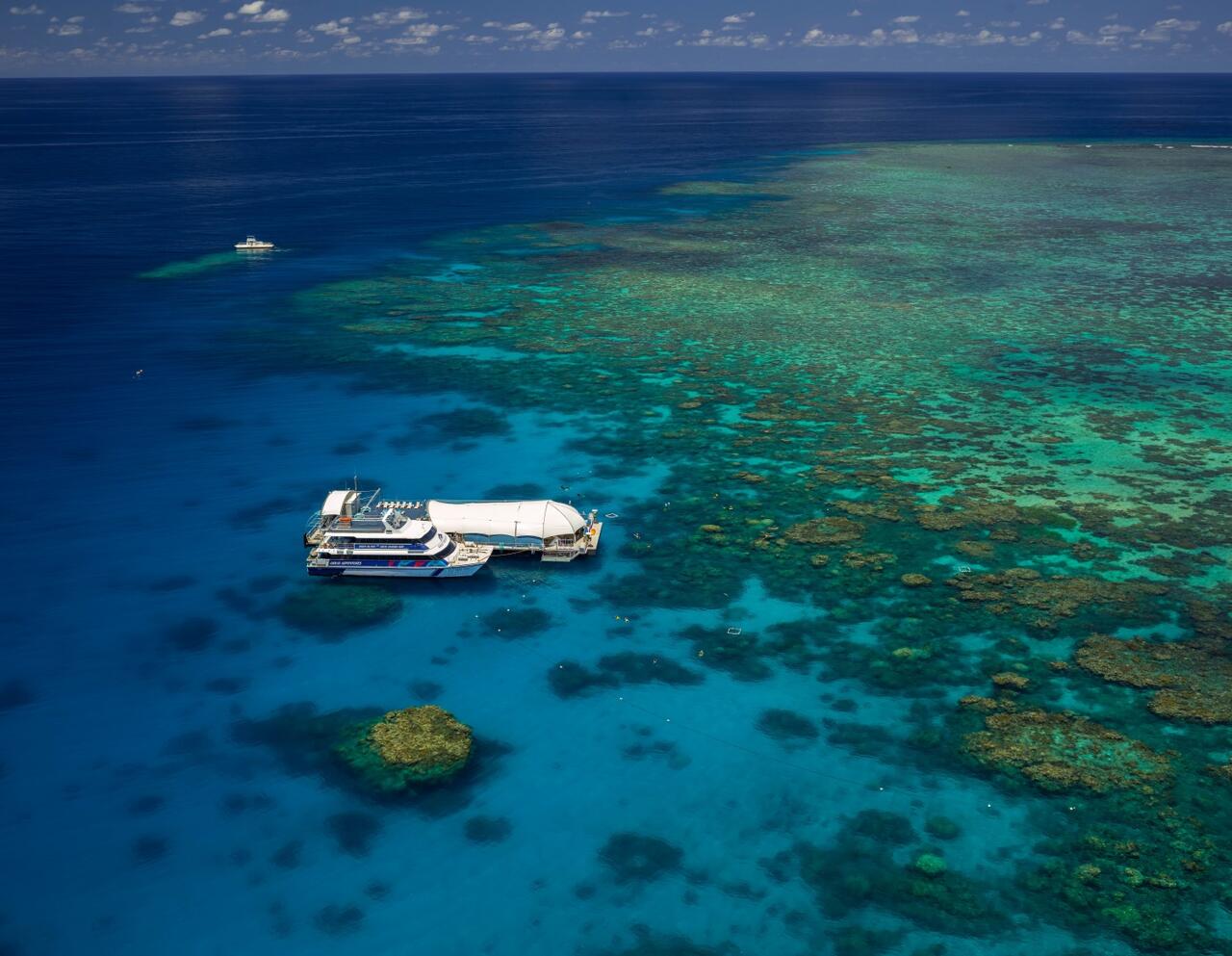
Outer reef platforms visited from Cairns include Agincourt Reef, Norman Reef, Hastings Reef, and Saxon Reef, each featuring shallow lagoon systems where staghorn and plate corals create three-dimensional structure for parrotfish schools, Maori wrasse, and seasonal manta aggregations. Water temperature holds between twenty-three and twenty-nine degrees Celsius year-round, eliminating thermal layering that plagues temperate dive sites. Morning departures between seven and eleven o'clock capture optimal conditions before afternoon trade winds build surface chop and reduce underwater visibility by suspending sediment.
The reef's UNESCO World Heritage designation in 1981 triggered zoning reforms that reserve thirty-three percent of the marine park as no-take green zones, where extractive activities remain prohibited and fish biomass averages twice that of adjacent blue zones permitting limited harvest. Snorkeling sites in Cairns fall predominantly within general-use zones that allow tourism under permit while restricting anchoring to designated moorings. This regulatory architecture has stabilized coral cover at benchmark sites even as warming events in 2016, 2017, and 2020 caused bleaching across northern sectors, demonstrating that localized management can buffer against basin-scale stressors when visitor protocols remain enforced.

Outer reef platforms visited from Cairns feature shallow lagoon systems where coral coverage exceeds seventy percent and visibility routinely reaches thirty metres.
Wear a swimsuit under light, quick-dry clothing, since most great barrier reef snorkeling cairns tours issue full-length lycra suits (stinger suits) for sun and jellyfish protection year-round. Reef shoes or sandals are useful for pontoon decks, which get hot and slippery.
Boats depart from Cairns Reef Fleet Terminal and Marlin Marina, where check-in involves a bag check and a safety briefing before boarding. Only soft daypacks are practical since storage on catamarans and pontoons is limited to small lockers or communal bins.
Underwater cameras and GoPros are welcome on all vessels, and many great barrier reef snorkeling cairns tours sell disposable underwater cameras or offer paid photo packages taken by crew photographers. Drone use is restricted around vessels and pontoons under Marine Park aviation rules.
Children as young as 3–4 can join glass-bottom boat or semi-submersible viewing on most great barrier reef snorkeling cairns tours, with flotation vests provided for young snorkelers. Family cabins and shaded pontoon areas are standard on the larger outer-reef vessels.
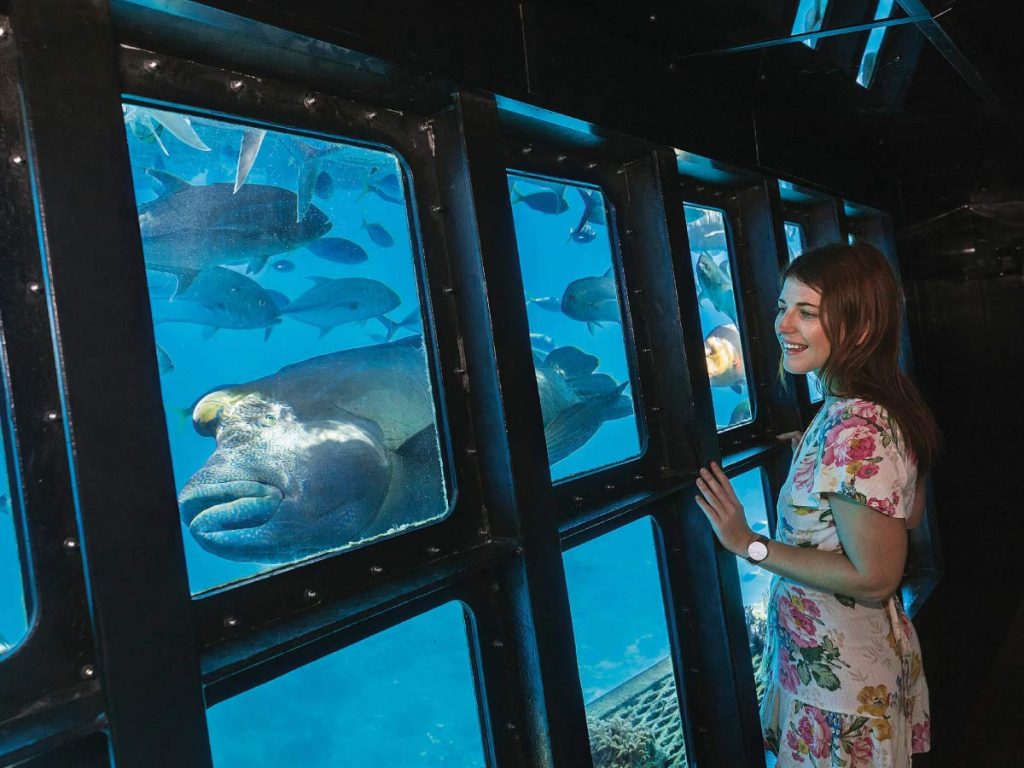
Larger pontoon operators on the outer reef offer ramps, semi-submersibles, and underwater observatories for guests who cannot snorkel, while smaller day boats have limited wheelchair access due to narrow gangways. Staff can assist with boarding at both Cairns Reef Fleet Terminal and Marlin Marina with advance notice.
Morning tea, a buffet lunch, and tea or coffee are included on most full-day outer reef trips, with tropical fruit and salads common on pontoon buffets. Alcohol is sold on board on some vessels, while others operate a strict no-BYO-alcohol policy — check the specific tour terms.
Marine Park always accessible; tours run set departures
Busier with weekend day-trippers
Open 24 hours daily (Marine Park); reef tours depart approx. 07:00–08:30
location
Opening hours
00:00 – 23:59
Getting there
City-center access via metro and bus
Accessibility
Most experiences are wheelchair-friendly — check individual tours
What to bring
Comfortable shoes, water, phone for mobile voucher
Car · 10-20 minutes from northern beaches · Parking approx. 15-25 AUD/day
Drive to Cairns City and park near the Cairns Reef Fleet Terminal on Spence Street, where paid parking lots and street parking are available.
Taxi · 10-30 minutes depending on origin · Approx. 15-45 AUD
Taxis and rideshare services run directly to Cairns Reef Fleet Terminal or Marlin Marina from hotels in Cairns, Palm Cove, or Trinity Beach.
Walk · 5-15 minutes from Esplanade hotels · Free
Most Cairns Esplanade hotels are within easy walking distance of the Reef Fleet Terminal along the waterfront promenade.
Public transport · 15-30 minutes depending on route · Approx. 2-5 AUD
Sunbus local services run along the Cairns Esplanade with stops near the terminal precinct.
Most Great Barrier Reef snorkeling Cairns tours allow free cancellation up to 24 hours before departure, with full refunds issued after that window minus the 8.5 AUD Environmental Management Charge, which is non-refundable once paid to the reef authority. Weather-cancelled departures are typically rebooked or refunded in full by the operator.
Recommended time
4 to 9 hours
Planning your trip requires accounting for travel time to the outer reef, as most great barrier reef snorkeling cairns excursions operate on full-day schedules. Visitors should prioritize the best arrival window of 07:00–11:00 to ensure calm sea conditions and optimal water clarity before afternoon winds increase. Selecting from various great barrier reef snorkeling cairns tours allows you to balance transit time with underwater activity, while securing great barrier reef snorkeling cairns tickets in advance ensures availability for popular departure times. Please note that the 8.5 AUD Environmental Management Charge is included in commercial tour prices.
Crowd levels through the day
Weather · crowds · average price — dots go green to amber to red as each metric rises.
September through November brings warm days around 25-29°C and some of the calmest seas of the year, making this a favored window for great barrier reef snorkeling cairns trips before the summer wet season arrives. Visibility is typically strong and stinger suits, while still provided, are less essential than in summer.
Wet season brings higher humidity, occasional rain squalls, and marine stinger (jellyfish) presence, so full-length lycra suits are standard issue on tours. Water temperatures are warmest, around 28-30°C, appealing to swimmers despite the stinger precautions.
Seas gradually calm after the wet season, with April and May offering improving visibility and fewer crowds than the June-August peak. Temperatures sit around 24-28°C, a comfortable shoulder season for reef trips.
Peak tourist season with drier weather, cooler air around 18-26°C, and the year's best average underwater visibility, drawing the largest crowds and requiring earlier bookings. This period overlaps with Australian and international school holidays.
Outer reef sites such as the Ribbon Reefs generally have healthier coral and clearer water than reefs closer to shore, so check which reef zone a tour actually visits.
1 Spence St, Cairns City QLD 4870
Main departure point for most outer reef vessels
Get directions
Pier Point Rd, Cairns City QLD 4870
Used by some operators for smaller vessel departures
Get directionsThe Great Barrier Reef Marine Park was formally established in 1975 under federal legislation, creating the world's largest protected marine area across 344,400 square kilometers. Before this landmark act, the reef faced mounting threats from oil drilling proposals and limestone mining operations that would have devastated sections of the ecosystem. The Great Barrier Reef Marine Park Authority—known as GBRMPA—assumed management responsibility in 1976, tasked with balancing conservation priorities against the region's growing tourism industry centered in Cairns. Zoning plans introduced in 1981 divided the marine park into color-coded sectors that determined where commercial activities could operate. Green zones prohibited extractive uses while permitting low-impact recreation, which shaped the geographic footprint of great barrier reef snorkeling cairns operations today. Tour operators from Cairns gained access to designated reef sites within day-trip range, anchoring the city's position as the reef's primary gateway. By 1988 the reef earned UNESCO World Heritage status, cementing international recognition and attracting scientific research stations alongside recreational visitors. The Environmental Management Charge was introduced in 1993 at six dollars per visitor, funding ranger patrols and mooring infrastructure that reduced anchor damage at popular snorkeling sites. Revised zoning in 2004 expanded no-take zones from five percent to thirty-three percent of the marine park, restricting fishing but maintaining tourist access to outer reef platforms. Coral bleaching events in 2016, 2017, and 2020 killed significant coral cover across northern and central sectors, prompting GBRMPA to tighten vessel discharge standards and limit visitor numbers at vulnerable sites. The authority now monitors reef health through annual surveys, adjusting permitted activities as conditions shift, while the network of commercially permitted moorings continues to define where great barrier reef snorkeling cairns tours can legally anchor.
Great Barrier Reef Marine Park Act passes federal parliament, creating the world's largest marine protected area.
Great Barrier Reef Marine Park Authority assumes operational control and begins drafting management frameworks.
First zoning plan divides the marine park into color-coded sectors regulating commercial and recreational use.
UNESCO inscribes the Great Barrier Reef on the World Heritage List, recognizing its outstanding universal value.
Environmental Management Charge introduced at six dollars per visitor to fund conservation and infrastructure programs.
Rezoning expands no-take green zones from five percent to thirty-three percent of the marine park.
Three mass coral bleaching events kill significant coral cover, prompting stricter vessel and visitor regulations.
GBRMPA implements adaptive management protocols adjusting permitted activities based on annual reef health surveys.
Position yourself on the underwater observatory level to capture coral gardens and passing schools of fish through the glass. This stable structure allows for steady wide-angle shots of the reef shelf without needing to tread water.
Exploring the reef with children requires careful planning, but families often find great barrier reef snorkeling cairns to be a rewarding way to introduce kids to marine biodiversity. Balancing time in the water with onboard observation helps ensure everyone stays comfortable throughout the day.
Choose large, stable catamaran vessels for your great barrier reef snorkeling cairns tours to minimize motion; consult a pharmacist before departure regarding age-appropriate anti-nausea solutions.
Opt for reef platforms that offer semi-submersible or glass-bottom boat tours, allowing children who are not yet confident swimmers to view coral gardens and tropical fish.
Consider half-day trips if you have toddlers, as a full day on the water can be exhausting; always check if your selected great barrier reef snorkeling cairns tour provides shaded areas on deck.
Most operators supply child-sized masks, fins, and life vests, but contacting them in advance ensures the right fit for your little explorers before you purchase your great barrier reef snorkeling cairns tickets.
Look for vessels equipped with freshwater rinse stations and accessible toilets, which are essential for cleaning up salt water and keeping young children comfortable between sessions.
Aim to arrive during the best arrival window of 07:00–11:00, as calmer morning seas provide a gentler environment for families starting their aquatic adventure.
Dining options at Great Barrier Reef Marine Park, Queensland, Australia are limited to vessel-based catering, making preparation essential before your great barrier reef snorkeling cairns excursion. Most visitors coordinate meals through their selected Cairns reef tour operators, though various cafes await your return at the marina.
Located at the marina, this venue offers expansive deck seating and fresh seafood ideal for post-trip relaxation. It is a preferred spot for those returning from their great barrier reef snorkeling cairns tours.
This casual trawler-style dining experience specializes in fresh prawns and buckets of seafood. It provides a unique atmosphere for guests holding great barrier reef snorkeling cairns tickets.
A convenient stop for coffee and light breakfast items before your morning departure. It serves as a reliable fuel station prior to any great barrier reef snorkeling cairns tour.
Everything you need to know for your journey
The Great Barrier Reef Marine Park itself has no closing time and is accessible 24 hours a day, though individual snorkeling tours depart Cairns on fixed morning schedules, typically between 07:00 and 08:30.
There is no separate ticket booth fee; instead an 8.5 AUD Environmental Management Charge (EMC) is included in the price of commercial tours.
Larger outer-reef pontoon vessels typically offer ramps, semi-submersibles, and underwater observatories for guests with mobility limitations, while smaller day boats have more limited access.
Prohibited items include spearfishing equipment, coral or shell collection tools, glass containers, drones without operator permission, and aerosol sunscreen sprays.
Yes, underwater cameras and GoPros are welcome on Great Barrier Reef snorkeling Cairns tours, and many operators also sell disposable underwater cameras or crew-taken photo packages.
Winter months (June to August) draw the largest crowds due to school holidays and peak visibility, so booking a spring (September to November) departure or an early morning slot within 07:00-11:00 tends to mean calmer water and fewer boats at the reef.
Most tours issue full-length lycra stinger suits, so wearing a swimsuit underneath light clothing is sufficient; reef shoes help on hot pontoon decks.
Most full-day Great Barrier Reef snorkeling Cairns tours include morning tea and a buffet lunch, with alcohol availability varying by operator.
Most departures leave from Cairns Reef Fleet Terminal or Marlin Marina, both within walking distance of Cairns Esplanade hotels or a short taxi ride from the wider Cairns area.
Yes, many tours welcome children from around age 3-4 with flotation vests and glass-bottom boat or semi-submersible viewing options for non-swimmers.
Most operators allow free cancellation up to 24 hours before departure with a full refund minus the non-refundable 8.5 AUD Environmental Management Charge.
The Cairns Esplanade Lagoon, Cairns Aquarium, and Rusty's Markets are all within a short walk of the reef terminal precinct and pair well with a reef day trip.
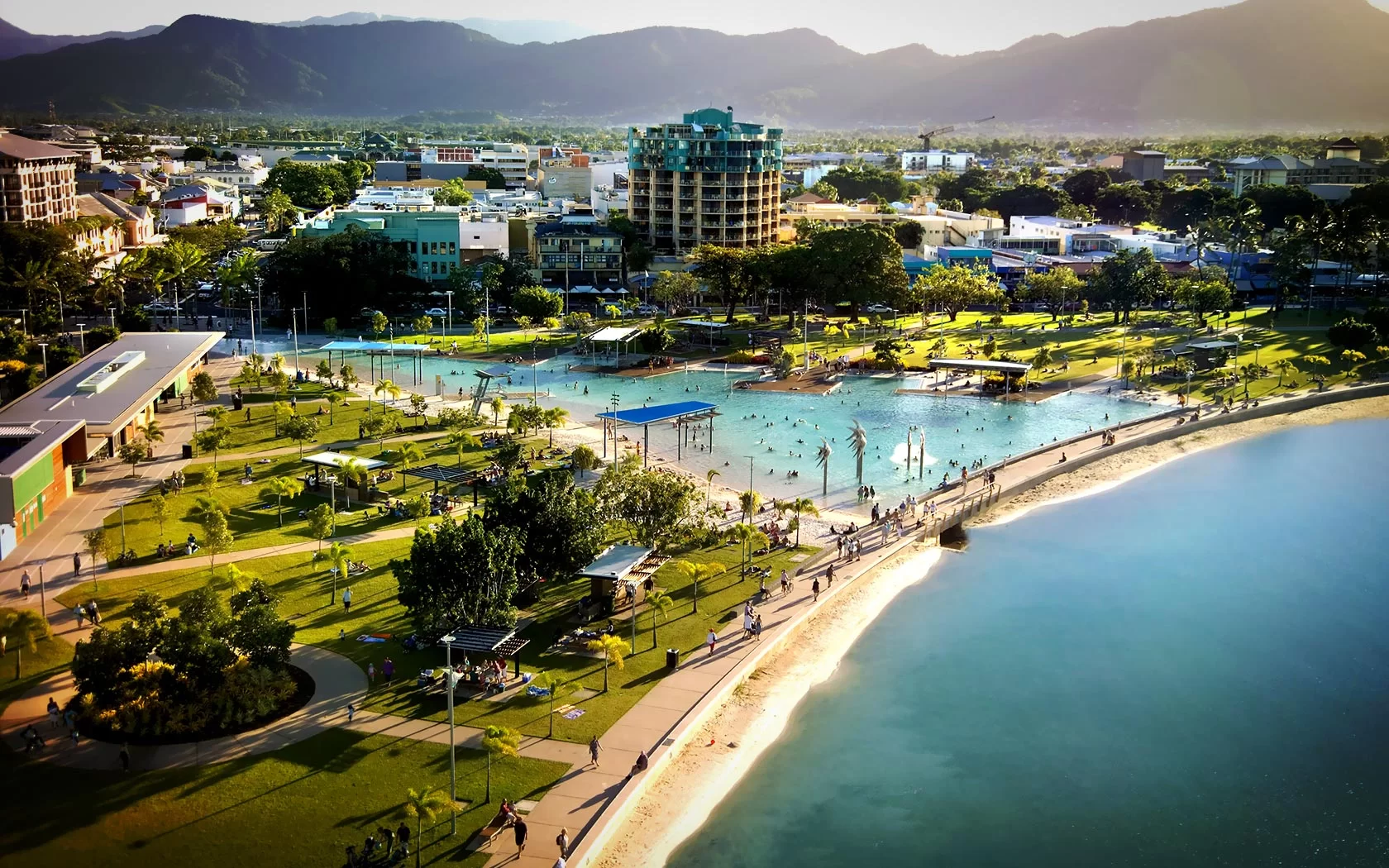
A free public swimming lagoon along the Cairns waterfront popular for families and evening strolls.
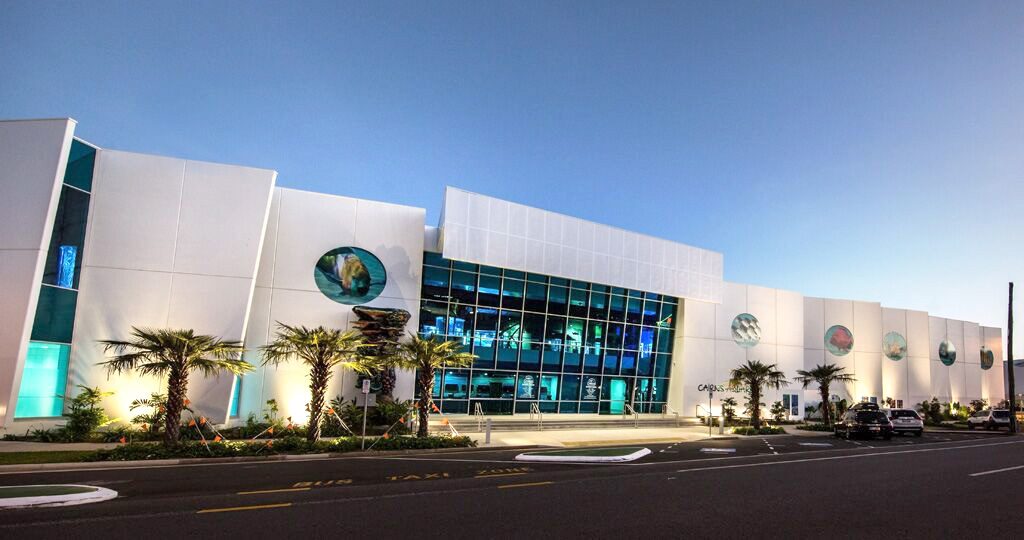
A marine life aquarium featuring Great Barrier Reef species, useful for a pre- or post-tour visit.
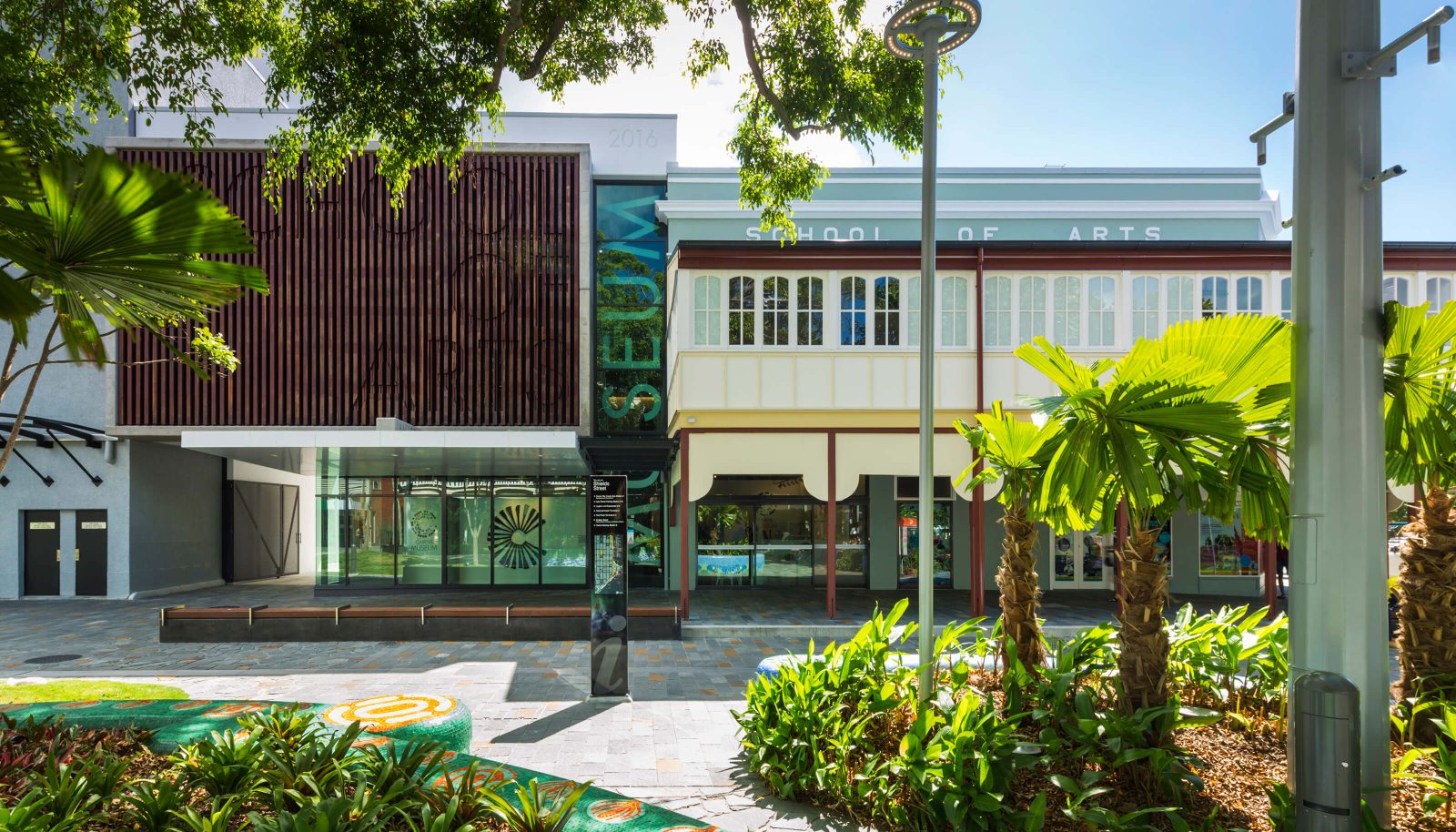
A small heritage museum covering the history of Cairns and the Far North Queensland region.
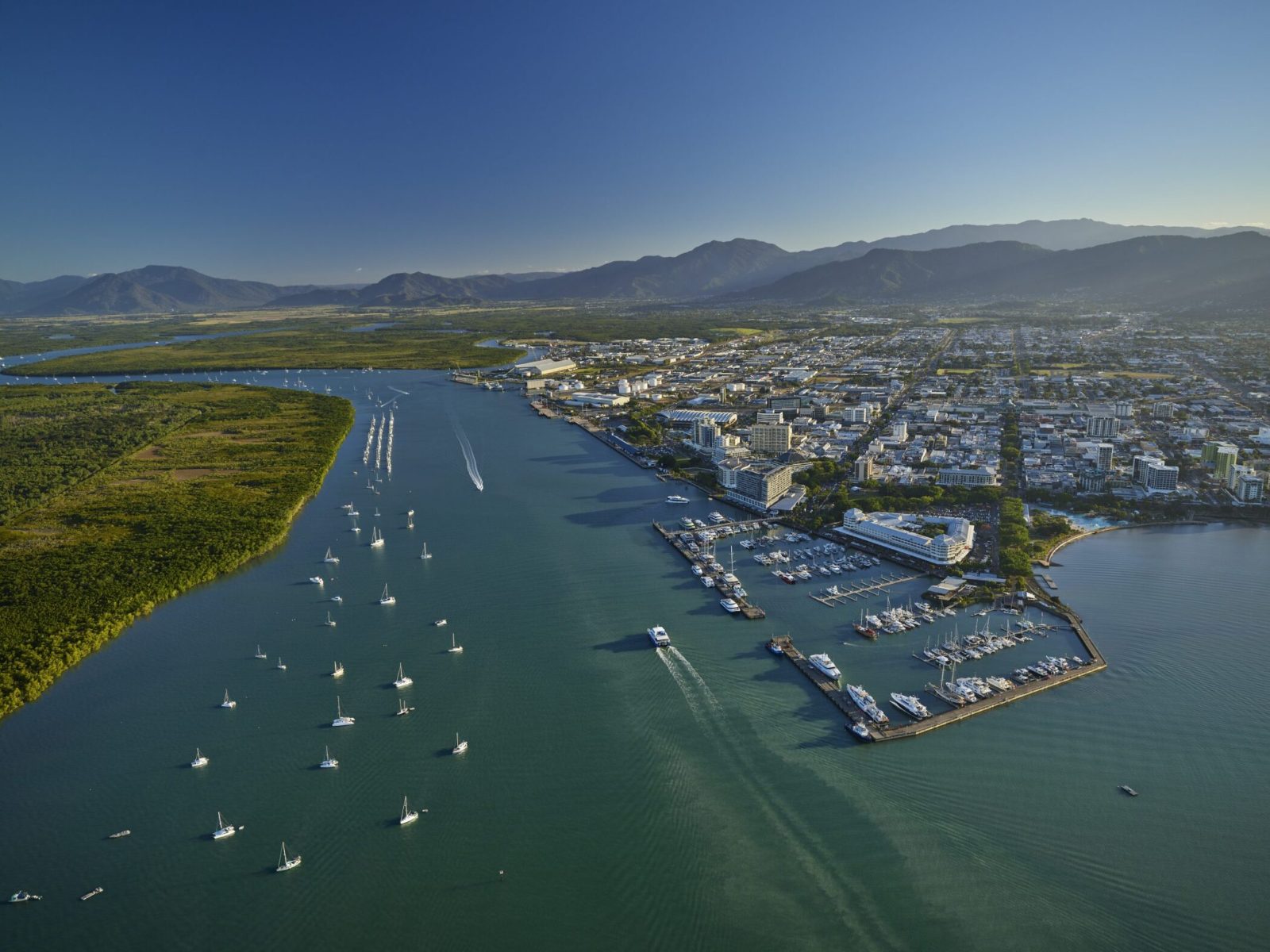
A waterfront lookout over Trinity Inlet and the Cairns marina precinct.
A local produce and craft market held Friday to Sunday in the Cairns CBD.
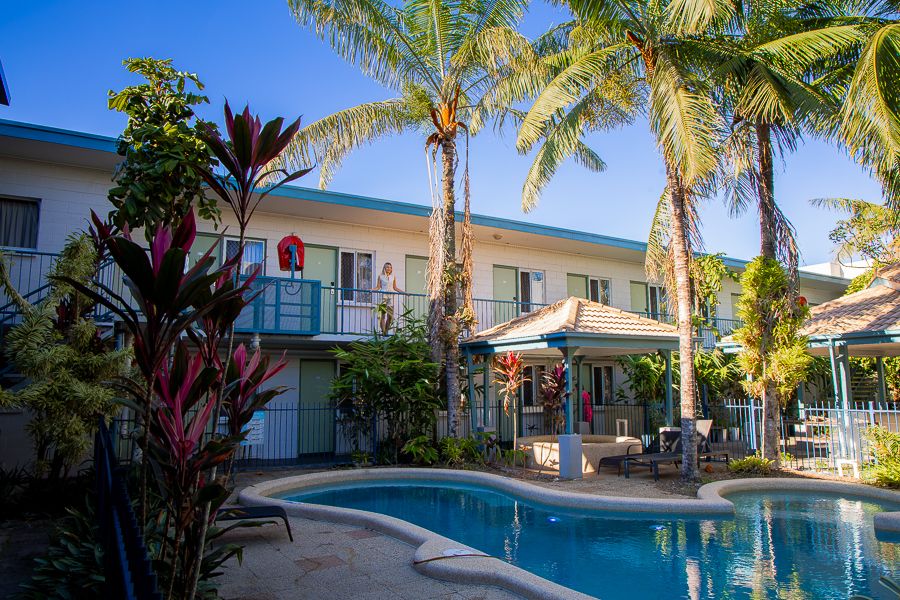
Waterfront strip with a mix of resorts, apartments, and backpacker hostels near the reef terminals.
Harbor-front hotel directly adjacent to Marlin Marina with marina views.
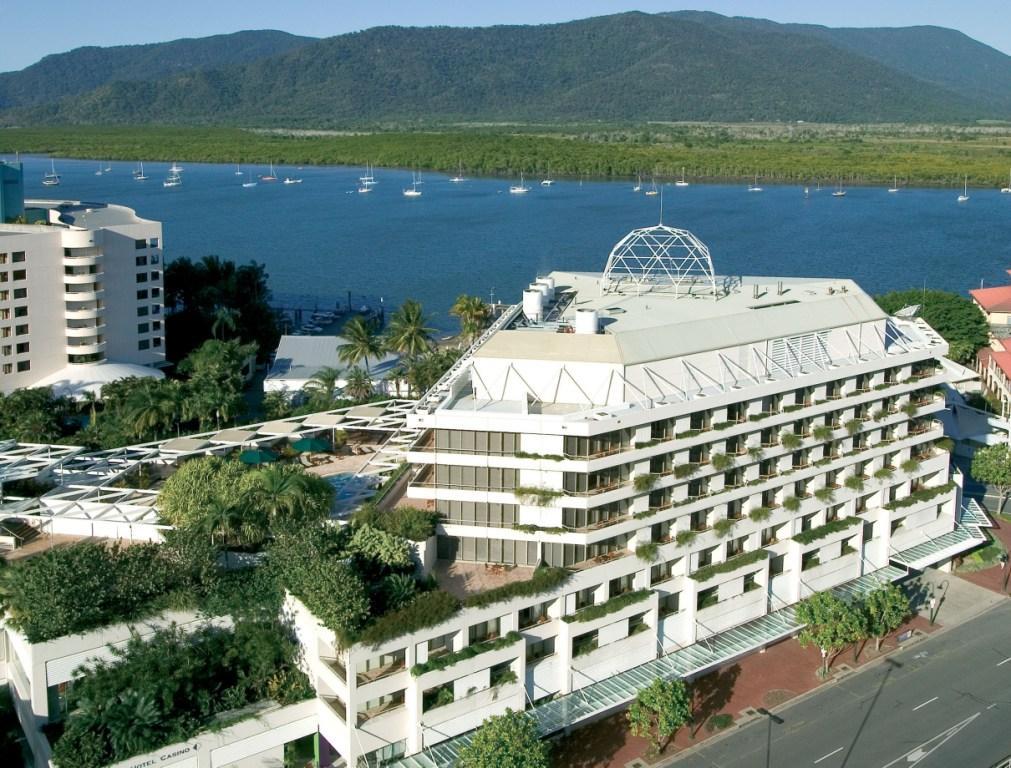
Central Cairns hotel with a casino and pool, a short walk from the Reef Fleet Terminal.
Cluster of budget hostels around the CBD popular with divers and backpackers.
Quieter beachfront resort strip north of Cairns, an alternative base for reef trips.
Join thousands of happy travelers who have discovered this incredible experience
Book Your Experience Now